What Is an Economy?
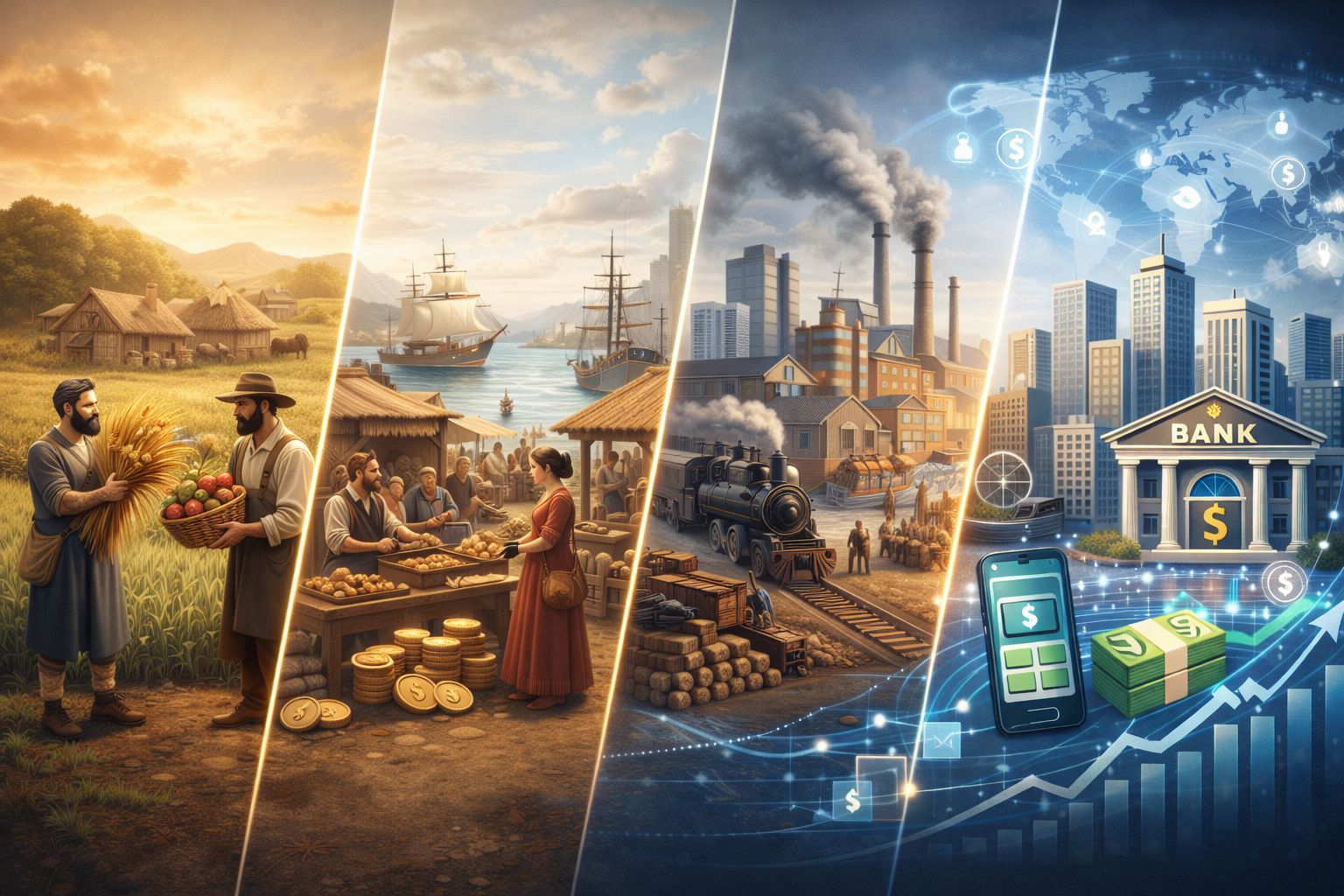
What Is an Economy? How It Started and How It Affects Our Lives Today.
Why economy matters to all.
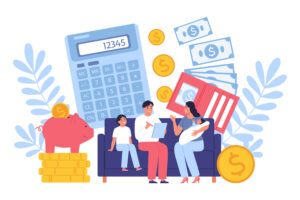
It’s funny, almost every part of our lives is affected by the economy, even though we hardly ever stop to think about it. Everything from food prices to job offers, from our rent or salary to tax rates and our savings it all quietly shapes the choices we get to make and the opportunities we find.
But what is, in particular, an economy? How did it begin?
Humans constructed an intricate way of managing resources, labor and wealth, and why did they form such a complex system? What exactly is an economy? How did economic systems start in the Ancient World and turn into the globalized economy that they are today? The guide is written in plain, basic language and perfect for beginners, students, or anyone curious about how society organizes wealth and resources.
What Is an Economy?
It is the system by which people produce, barter, allocate, and use goods and services. To put it simply, it’s how a society determines:
What to produce. How to produce it. Who gets what. No matter how small, no matter how large, every society has an economy.
You know, even ancient tribes that didn’t use money had an economy. Theirs revolved around sharing, trading, and helping each other out.
When you break it down, the core elements of any economy are things we all know: resources like land, labor, tools, and knowledge. Making products or services (production). Distribution (how goods are distributed or sold). Consumption (use of goods and services).
How Did the Economy Begin?
The Barter Economy: Origins of the First Economy. The first economies traded directly between people.
For example:
Grain for meat. Tools for clothing. Labor for shelter. Barter, though simple, had serious constraints: The parties had to want what the other was giving. Goods could not always be easily divided. There wasn’t a standard for how to measure value. These difficulties caused human beings to search for better ways to solve them.
The Birth of Money To overcome barter’s constraints, societies began to use money—objects accepted as currency. Early forms of money included:
Shells. Salt. Precious metals. Coins. Money allowed people to:
Store value. Measure worth. Trade more efficiently. It was the turning point that let economies move past the boundaries of local communities.
Early Economic Systems. Agricultural Economies. The economies of the world changed dramatically when humans settled upon and started farming.
Agriculture allowed:
Food surpluses. Population growth. Specialization of labor. Not everyone had to farm anymore. As societies evolved, some people became builders, merchants, or artisans, which started more complex economies. Then came trade and markets. When civilizations grew, markets sprang up to bring people together to buy and sell. Trade routes began to link far-off places, spreading all kinds of goods. Culture. Technology. Ideas.
A couple of famous examples you might have heard of are the Silk Road and those Mediterranean trade networks. And of course, governments have always played a role in the economy, too. As economic activity expanded, governments began to take a central role by:
Creating laws. Collecting taxes. Issuing currency. Protecting trade. This helped stabilize economies and promote long-term growth, but it also brought power structures and inequality. Economies changed more than any advance before, thanks to the Industrial Revolution (18th–19th centuries).
Key Changes:
Machines supplanted manual workers.
Little workshops turned to factories.
Mass production reduced costs.
Urbanization increased. During this period, there was the emerging of capitalist societies (private industry) in which there were private individuals who have their own businesses operating for profit.
Types of Economic Systems.
- Traditional Economy. On the basis of customs and traditions. Common in early societies.
- Take a market economy, for instance. Here, prices are really decided by supply and demand, with minimal government stepping in. Examples include: United States; many Western countries.
- Command Economy. Production and prices are government controlled. Limited personal choice. For instance, historical Soviet Union.
- Mixed Economy. Market freedom combined with government regulation. This system has been adopted in most modern countries. How the Modern Economy Works. It is global and extremely interconnected.
Key Features:
International trade.
Digital payments.
Then there are the banking systems we rely on.
And the financial markets.
Not to mention the global supply chains that connect us all.
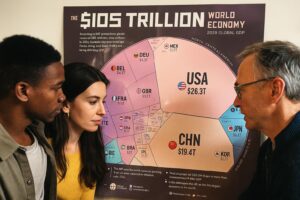
One country’s decision affects prices, jobs and markets across the world.
The Role of banks and financial institutions:
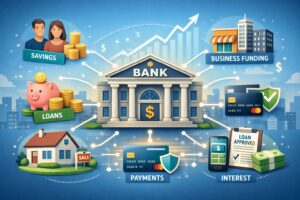
Modern economies depend on banks to:
Safely store money.
Provide loans to clients.
Enable payments.
Support businesses.
Encourage investment.
It’s hard to imagine, but without banks, our economic growth would likely slow to a crawl.
Now, think about technology and the digital economy.
Technology has transformed the whole thing once again. Examples: Online shopping. Mobile banking. Remote work. Artificial intelligence. This digital economy is leading to faster transactions, global access and new business models.
Why Economies Grow — or Fail.
So, how do economies grow? It usually happens when productivity increases and innovation thrives. Education improves. Institutions are stable. On the other hand, economies struggle when there’s political instability, Corruption. or when there’s poor resource management. Extreme inequality. The Economy and Everyday Life. You experience it through:
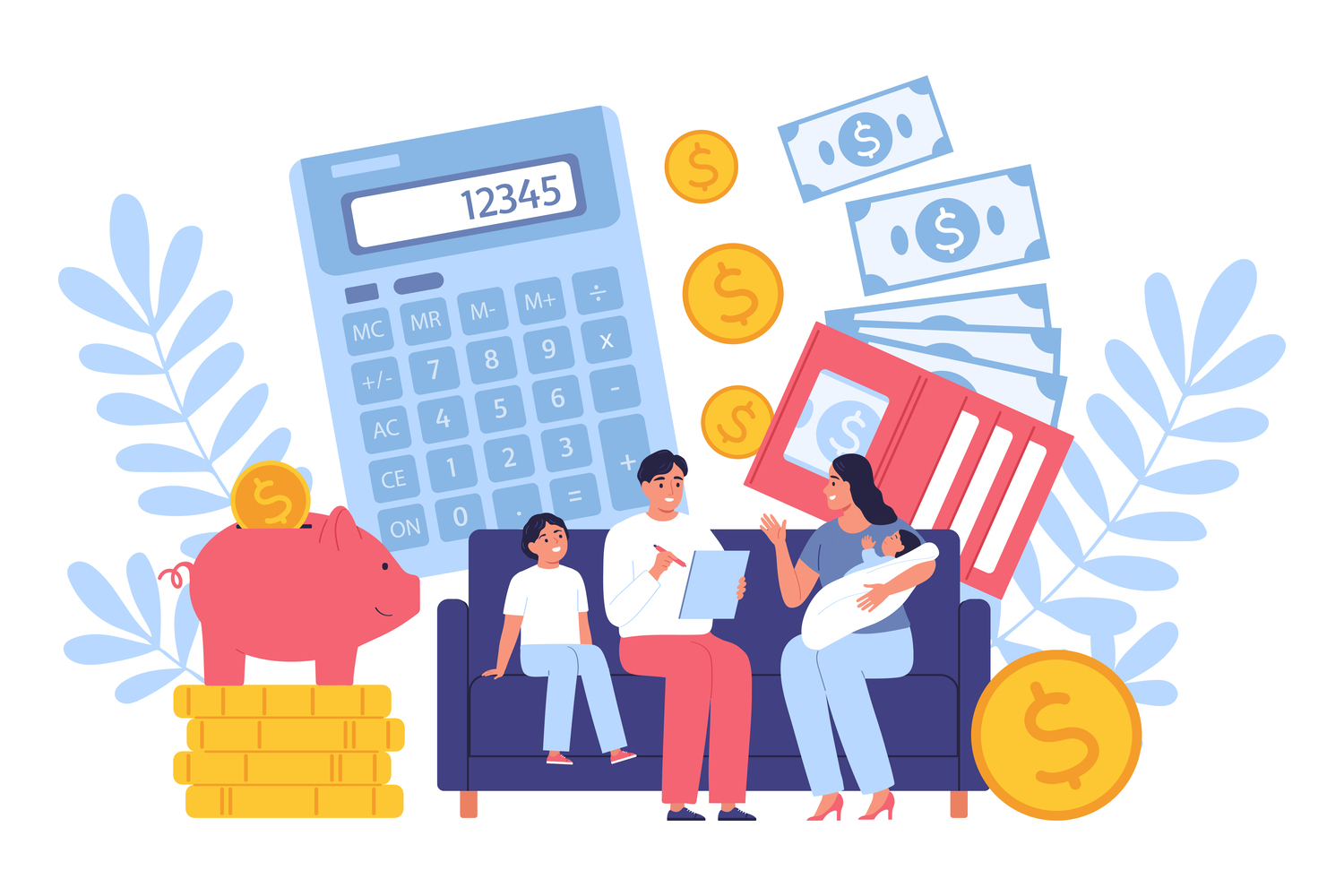
Prices in stores. Your paycheck. Job availability. These aren’t just abstract ideas they affect the housing costs we pay and the taxes and public services we use. Understanding it helps people.
Budget better. Understanding this can help us make wiser career choices and plan our long-term finances better. Understand global events.
So, what about the future of the economy?
Looking ahead, economies will keep on changing. We’re already seeing emerging trends like green and sustainable economies, automation and AI, and the move toward cashless societies.
Debates on universal basic income. Global economic cooperation. Nonetheless, the economic purpose persists: the economy exists to organize resources to address human need.
Final Thoughts on the matters.
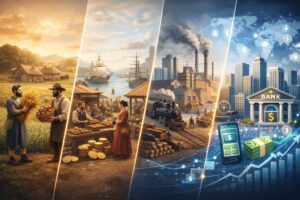
When you think about it, the economy didn’t just materialize overnight. It developed over thousands of years as people looked for better ways to survive, trade, and thrive. From ancient barter systems to today’s digital global networks, it really reflects human creativity, cooperation, and ambition.
Share this content:







Post Comment
You must be logged in to post a comment.