A Family Conversation About Money At Home
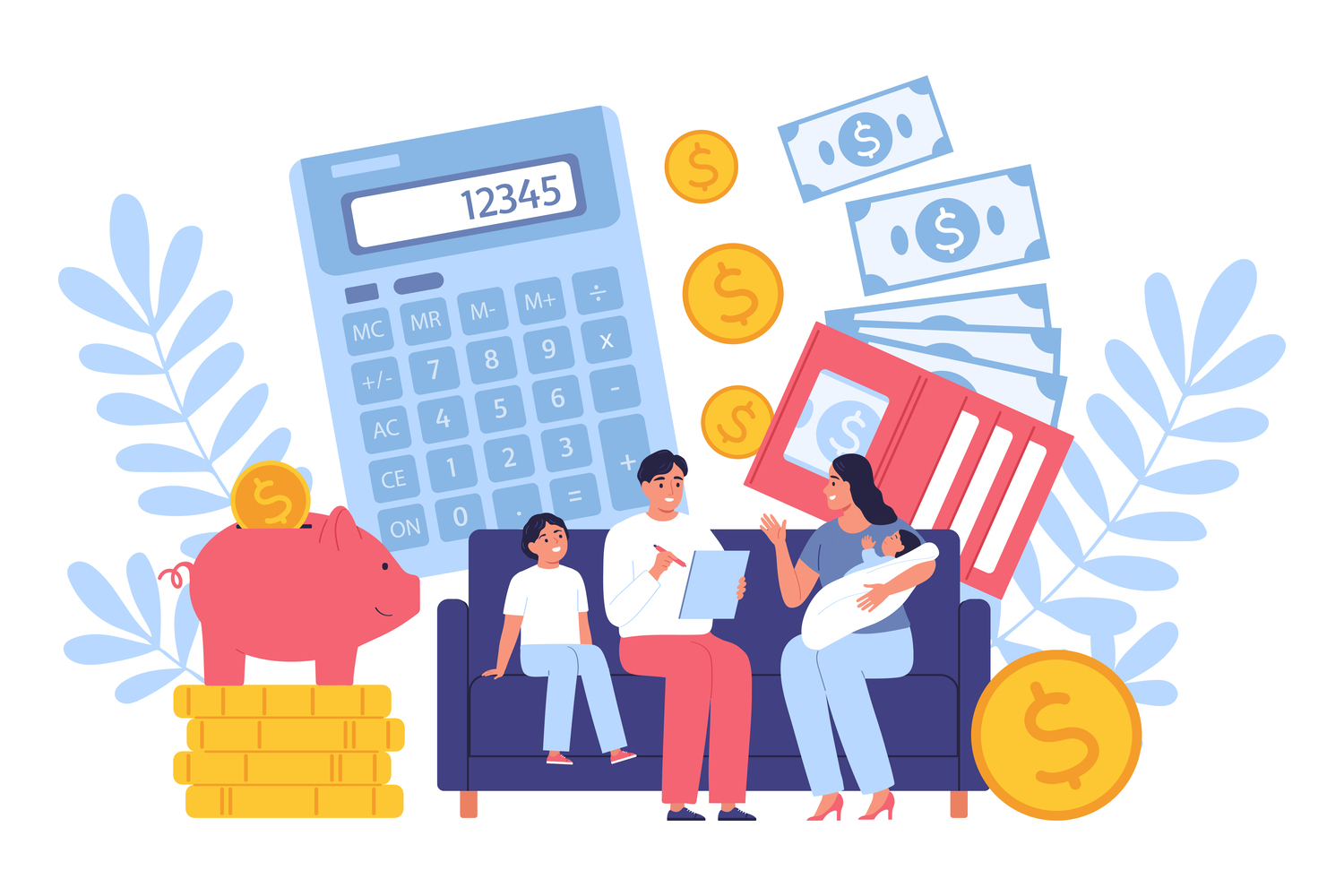
Having a Family Conversation About Money At Home, Discussing family money, discuss money at home, instigate discussion for kids finances, first money conversations.
Starting off with open and positive conversations about money in the home will make way for good financial habits out of life in the future. Talking with your partner, your children and of course everyone else in your family that first conversation need not be cumbersome or complicated.
It is important to have an open-door policy for both sides. It’s time to establish a good habit of talking, understanding the subject; we must begin communicating our feelings about money.
This week in the blog, we will explain why having this good conversation is important, how one should prepare his or her thoughts, and in what ways it could be changed; we will also mention what will stop the conversation from fizzling out and some of the tricks that help children and elders develop into adults.
Let ‘s take the opportunity to skip on to what is best suited for your family or the teenage/adults portion of the conversation.
Why Have This Conversation?
Lots of families don’t talk about money. But that silence tends to sow uncertainty, misunderstanding or secret stress.
“Most families avoid talking about money even though open communication tends to lead to informed choices and lower levels of stress.”
“Money conversations can be hard to have…but by breaking these cycles and stigmas you will better prepare [children] for healthy financial futures.”
So: a first conversation matters.
It matters simply because; it. Establishes trust and openness in the family. Gives everybody a common vocabulary about money (for what, how). Assists children (including for adults) transitioning from “money is scary” to “money is something we talk about”. Provides the context for alignment on values and goals (not numbers).
Easier and less stressful future money talks.
When you start on purpose you establish the ground for healthy practices in spending, saving, giving – and for curtailing money-stress in your home.
How to get ready for the first meeting.
Here are a few things you can do ahead of time.
Choose a time when you’re at ease – not at the peak of a busy day, annoyed by bills or running late. The atmosphere should feel safe, calm, distraction-free.
Do a little homework. You don’t need spreadsheets or extensive financial reports.
But it works to think about: What you want to talk about (your goal).
What message or value do you want to convey?
“Make a list of the topics you want to discuss and familiarize yourself with the points you want your children to understand.”
Set the tone: collaborative, not “lecture”. It’s not a one way talk from parent and child or partner to partner – it’s not when you say “here’s how we need to do it”. Instead, seek questions, listening and shared thinking.
“Ask, don’t lecture. Use questions to invite everyone’s thoughts.”
Be prepared for emotions. Money is emotionally fraught — pride, fear, guilt, hope — can all be present.
Know that discomfort is normal, and treat the discussion as a beginning, not a perfect meeting.
What It Is A First Conversation Should Discuss. Keep it light and start at the beginning since this is your first talk.
Here are some proposed ideas and topics:
A. What is money for? Put it simply: money is not simply money spent and bills for; money is in its fundamental ability to afford to live a life we choose: to pay for things, to work out a plan if we’ve been successful, to help others, to have an enjoyment of life. That begins to provide framing of money through purposes and values not just restriction.
B. Needs vs. Wants. Here is an excellent question to start: “What do you think is a need? What is a want?”. It really helps kids (or partners) start thinking about priorities.
C. Save, Give, Spend. The concept should be preserved: some money we spend now, some we save for later, and some we might even donate to help. Depending on the kids’ ages, you might be doing this with them with a piggy bank or discussing family savings goals with older kids and adults.
D. Shared Goals. Choose an uncomplicated, mutual goal to talk about (for example: “We want to save up X for a family outing”, or “Let’s plan how we manage pocket money/saving”). Making it a team goal can make it more manageable.
E. Values and Attitudes. Discuss your beliefs regarding the money: “We believe in taking care of our responsibilities first” or “We believe in enjoying life but also planning ahead”. By sharing your values you make any discussion feel richer than just numbers.
F. Responsibility and Inclusion. When speaking to children, make sure to include them. “What would you like to save for?” “How might we jointly decide what we would spend on?” Empowering them develops ownership.
“Children who hear positive money conversations at home are more likely to build healthy financial habits as adults.”
G. Make a Next Step
Close the conversation with a simple next step: e.g., “Let’s pick one saving goal this month and check in next week.” Or “Let’s each pick one question we’d like to ask about money next time.”
Creating a small and clear actionable step helps make the talk meaningful.
How to Make It a Habit – Not a One-Off
A single conversation is great yet the strongest results come from repetition and habit. Here’s how to turn it into an ongoing dialogue:
Schedule regular check-ins: Even short ones (10 minutes “money minutes”) weekly or monthly. “Small, regular talks … work better than waiting for a big crisis or conflict.”
Keep it informal and low-stress: It doesn’t need to be a major meeting just friendly discussion over dinner or during a walk.
Celebrate the small wins: If you have managed to save a little, or if you have made a joint decision, acknowledge that too. This builds momentum.
Adapt as the child grows: The topics you discuss with a child will be different from what you would discuss with a teenager or an adult.
Be transparent and model the behavior: It is important that you practice what you preach, and that you are financially healthy yourself.
“Practice what you preach. The best way to teach [children] about financial health is by demonstrating it through your own practices.”
Tailoring the Talk: Age & Role-Based Tips
When speaking to young kids (around ages 5-10)
You can explain that money is limited using examples such as coins and a piggy bank.
You can also play simple games with the kids, such as a pretend shop, and ask them, for example, “if you have X €, what would you spend it on?”
Emphasize that money is for needs, wants, and helping others. Use simple language and make sure they don’t feel burdened. do not scare children about money.
Pre-teens / teenagers.
Involve them in everyday decisions: e.g., “We’re choosing between A and B for our holiday budget what’s your opinion?”
Also talk about saving for bigger goals, e.g., first car, trip, studies.
Include this in your discussions at home (age appropriate).
Encourage questions and their input With adult partner or shared household.
Align your values: What kind of life do we want to have in 5, 10 years? What responsibilities and goals do we share? Savings, retirement, vacations, family.
Create safe space: Avoid blame, compare values rather than just pointing out mistakes.
“Understanding each other’s values, goals, fears … can help couples literally build their future together.”
Also, keep meetings brief and goal-focused rather than dwelling on bills and spreadsheets.
Common Mistakes & How to Avoid Them
Starting in the middle of conflict or stress: Don’t start the conversation while you’re worried or upset; start it when you’re calm.
Making it a lecture rather than a dialogue: Ask questions, listen, and seek input.
Using shame or blame: Money mistakes happen. Model openness and learning.
Trying to cover too much at once: A first talk should be light. Trying to solve all problems at once can be overwhelming.
Never returning to the topic: If you only talk once, you risk the habit fading. Make it regular.
Sample Script for A First Conversation About Money at Home. Here’s a simple script you could follow (you can adapt to your family’s situation):
“Hey everyone, I thought it might be useful if we had a short chat about money together not because there’s a crisis, but because I believe it’s good for us to talk about how we manage money as a family. First: What do you think money is for? (Pause and invite responses)
I believe that for our household, money does three main things: it helps us cover what we need (food, bills), it lets us save for things we’d like (vacations, new …). And it gives us the chance to help others or do something meaningful. Next: I’d like us to think together about how we decide between ‘needs’ and ‘wants’. For example: is a trip a want or need? How about new clothes? Also: I’d like to propose we pick a small, shared goal this month like saving a little each week toward something just to get started. So, what does everyone think? And what goal would you like to choose together?”
Wrap up by summarizing the agreed goal and scheduling a short “check-in” in a few weeks.
Conclusion
The first conversation about money at home doesn’t need to be perfect it simply needs to happen. By engaging early, openly and with intention, you create a foundation of trust, shared values and financial understanding. The more you discuss money, the less awkward and more effective it becomes. The way to do it is to start small, keep it positive, make it regular, and involve everyone.
Share this content:













Post Comment
You must be logged in to post a comment.