Debt Relief vs. Bankruptcy: Choosing the Right Path
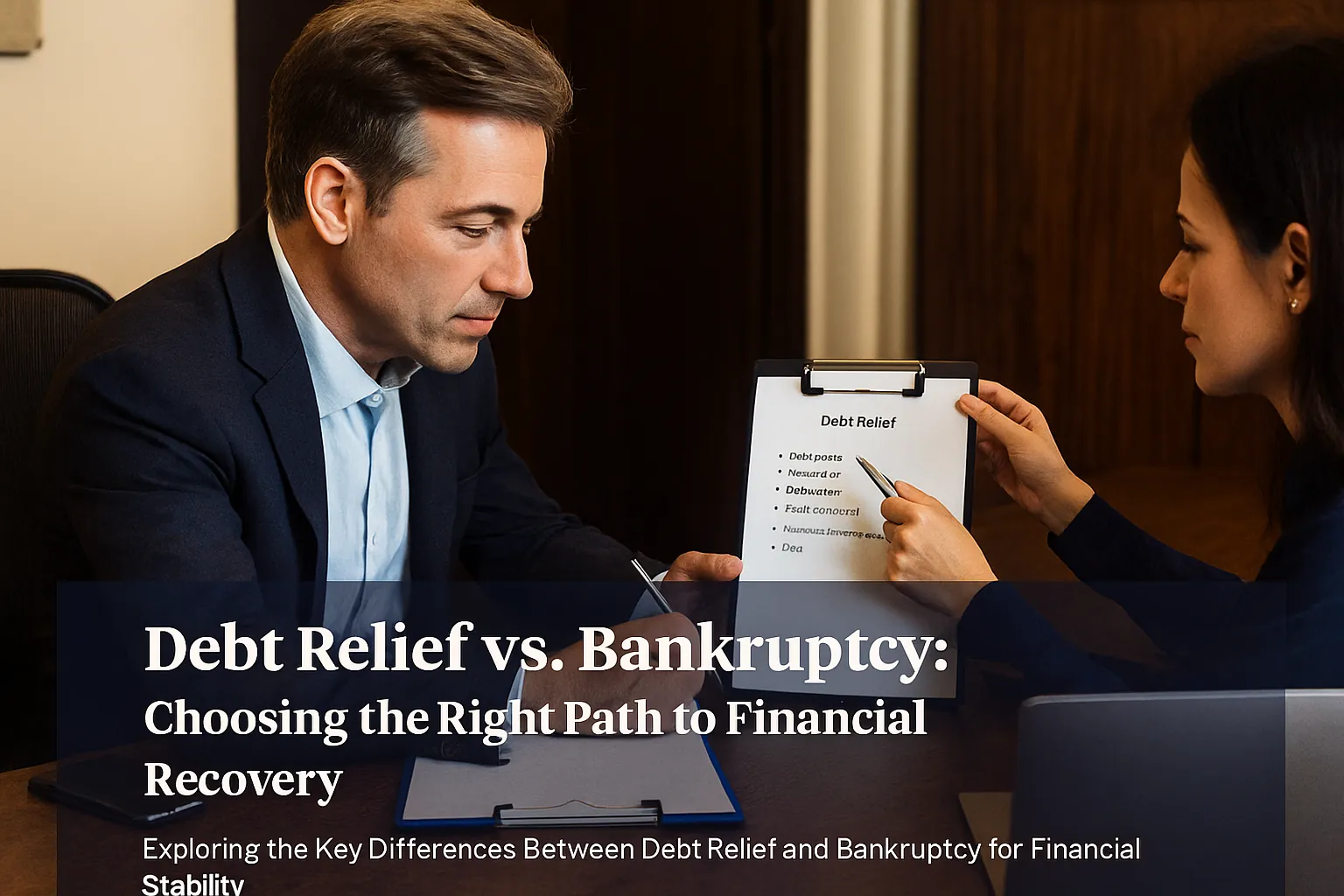
Debt Relief vs. Bankruptcy: Choosing the Right Path to Financial Recovery
Explore the key differences between debt relief and bankruptcy, understand their pros and cons, and learn how to choose the best financial recovery option in 2025.
💡 Introduction: When Debt Becomes Overwhelming
Debt can feel like a storm — bills piling up, interest compounding, and stress building daily.
In such situations, two common options emerge: debt relief and bankruptcy.
While both aim to help people regain financial stability, they differ greatly in impact, process, and long-term consequences.
This article will walk you through what each option means, their advantages and drawbacks, and how to decide which path fits your situation best.
🧾 1. Understanding Debt Relief
Debt relief is a broad term for strategies that reduce, restructure, or eliminate debt without going to court.
It’s often the first line of defense for those struggling to keep up with payments.
Common Forms of Debt Relief:
- Debt Consolidation:
Combining multiple debts into a single loan, usually with a lower interest rate. - Debt Settlement:
Negotiating directly with creditors to pay less than the full amount owed. - Credit Counseling:
Working with certified counselors to create a manageable repayment plan. - Debt Management Plans (DMPs):
Agencies negotiate better terms with creditors and manage payments on your behalf.
These methods allow borrowers to stay out of court, protect their credit scores (to some extent), and maintain more control over finances.
⚖️ 2. Understanding Bankruptcy
Bankruptcy is a legal process that helps individuals or businesses discharge or reorganize their debts under court supervision.
The Two Main Types for Individuals:
- Chapter 7 (Liquidation):
Most unsecured debts are erased, but non-exempt assets may be sold to repay creditors.
Typically for those with limited income. - Chapter 13 (Reorganization):
Debts are restructured into a 3–5 year repayment plan.
You keep your property but must follow the court-approved plan.
Bankruptcy provides a clean slate, but it also comes with serious consequences — including long-term credit damage and public record disclosure.
💬 3. Comparing Debt Relief and Bankruptcy
| Aspect | Debt Relief | Bankruptcy |
|---|---|---|
| Process | Informal, negotiated with creditors | Legal process through court |
| Credit Impact | Moderate, depends on strategy | Severe, remains on record up to 10 years |
| Asset Protection | Usually keeps all assets | Some assets may be sold (Chapter 7) |
| Cost | Lower (agency or negotiation fees) | Legal and court fees |
| Timeline | Varies (months to years) | Usually 4–6 months for Chapter 7; longer for Chapter 13 |
| Privacy | Private arrangement | Public record |
| Eligibility | Open to all borrowers | Depends on income and debt type |
Both paths can help — but they serve different types of financial distress.
🧩 4. When Debt Relief Makes Sense
Debt relief is ideal when:
- You still have steady income to make smaller, manageable payments.
- Your debt is mostly unsecured (like credit cards, medical bills, or personal loans).
- You want to avoid bankruptcy’s long-term credit damage.
- You can negotiate with creditors or work with a trusted counseling agency.
Example:
Ana owes €20,000 in credit card debt. She consolidates it into one loan with lower interest and a three-year payment plan.
Her credit takes a small hit initially but improves as she pays on time.
⚠️ 5. When Bankruptcy May Be the Better Option
Bankruptcy becomes necessary when:
- Debt far exceeds your ability to repay.
- You’re facing wage garnishment, foreclosure, or lawsuits.
- Creditors refuse negotiation or settlement.
- You have no realistic way to catch up.
Example:
Carlos lost his job, owes €80,000 in mixed debts, and has no assets.
Filing for Chapter 7 clears most of his unsecured debts, giving him a true fresh start.
🧠 6. The Emotional and Psychological Factor
Debt isn’t just numbers — it’s emotional.
The shame, anxiety, and uncertainty can be paralyzing.
Choosing between relief and bankruptcy often depends on mental readiness as much as financial logic.
Counselors recommend:
- Taking stock of your emotions before deciding.
- Seeking financial therapy if debt causes anxiety or avoidance.
- Remembering that both options are tools for recovery, not failure.
💬 7. The Role of Professional Guidance
Navigating debt laws and negotiations can be complex.
That’s why many people turn to debt management professionals, financial advisors, or bankruptcy attorneys.
They can:
- Assess your income, expenses, and credit.
- Explain how each option affects your future.
- Help you avoid scams or predatory settlement firms.
A professional’s insight ensures that you choose the least damaging, most effective path forward.
🧭 8. Hybrid Solutions: Restructuring and Refinancing
Between debt relief and bankruptcy lies another option: debt restructuring.
This approach renegotiates loan terms — lower interest, extended timelines — without formal bankruptcy.
It’s increasingly common among:
- Small businesses recovering post-pandemic.
- Homeowners refinancing mortgages to avoid foreclosure.
- Individuals seeking flexibility without legal stigma.
In many countries, even governments use restructuring to handle national debt — a sign of how legitimate this tool has become.
📈 9. Long-Term Effects and Credit Recovery
Whether you choose relief or bankruptcy, recovery takes time — but it’s absolutely possible.
Tips for rebuilding credit:
- Pay all remaining bills on time.
- Use secured credit cards responsibly.
- Monitor your credit report regularly.
- Build an emergency savings fund.
Within 2–3 years of responsible behavior, many people find themselves financially stronger than before.
🌱 10. The Future of Debt Solutions
The future of debt management will combine technology, empathy, and smarter policy.
We’re already seeing:
- AI-powered debt advisors that recommend tailored solutions.
- Behavioral finance tools that coach users toward debt freedom.
- Regulatory reforms promoting ethical relief programs.
As stigma fades, financial recovery will become less about punishment — and more about partnership.
💬 Final Thoughts
Debt Relief vs. Bankruptcy: Choosing the Right Path
Whether you choose debt relief or bankruptcy, remember that both are designed to give you a second chance — not to define your worth.
Debt can happen to anyone. What matters is taking informed, proactive steps toward rebuilding stability.
Start by assessing your income, obligations, and emotional wellbeing. Seek professional help, make a plan, and commit to consistency.
Your journey to financial recovery begins not with a perfect balance sheet — but with the courage to start again.
Share this content:












Post Comment
You must be logged in to post a comment.