Financial Wellness and Literacy Shift
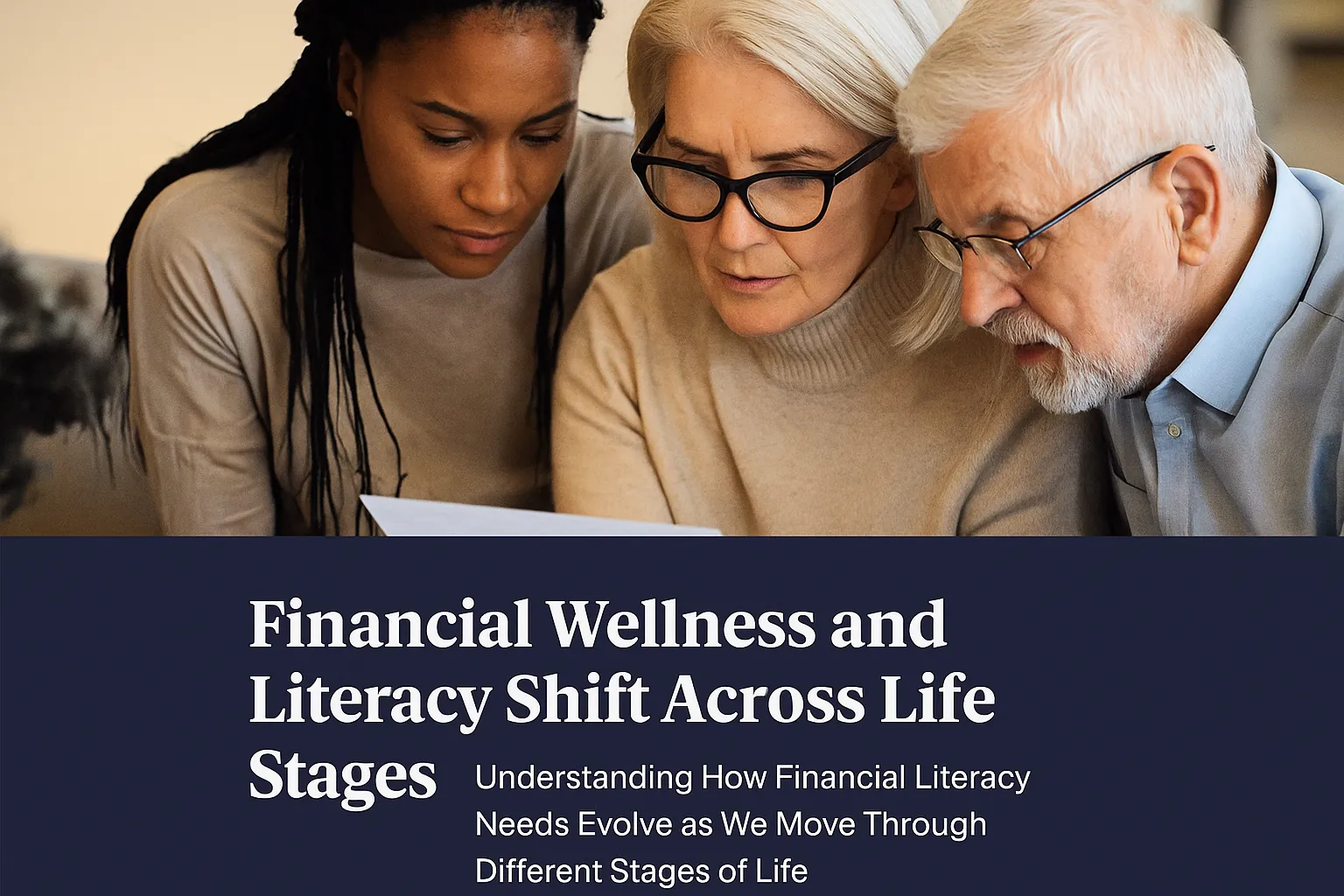
Financial Wellness and Literacy Shift Across Life Stages
Financial wellness evolves as we move through different stages of life. Learn how to adapt your financial literacy, priorities, and money habits from your 20s to retirement.
💡 Introduction: Why Financial Literacy Is a Lifelong Journey
Financial literacy isn’t something you learn once and forget.
It’s a lifelong skill that evolves as your goals, responsibilities, and circumstances change.
In your 20s, you’re figuring out how to budget.
In your 40s, you’re balancing debt, kids, and investments.
By retirement, you’re managing savings withdrawals and healthcare costs.
Each life stage demands a different financial toolkit — and yet, most people never update their knowledge.
That’s why financial wellness isn’t about knowing everything. It’s about knowing what matters most at your stage of life — and being willing to learn, adapt, and grow along the way.
🧠 1. Understanding Financial Wellness Beyond Just “Money”
Before diving into the life stages, let’s clarify what financial wellness really means.
It’s not just about having enough money — it’s about feeling secure, confident, and capable in your financial decisions.
True financial wellness involves:
- Control: You know where your money goes each month.
- Preparedness: You can handle financial surprises.
- Freedom: You can make life choices without money being the main limitation.
- Alignment: Your spending reflects your values and goals.
Financial wellness is emotional as much as numerical. And it depends heavily on your stage of life — because your priorities shift as you do.
👩🎓 2. Financial Literacy in Your 20s: Laying the Groundwork
Your 20s are a crash course in financial adulthood. You’re learning how to manage income, expenses, and independence — often for the first time.
Key Focus Areas:
- Budgeting: Track where your money goes and build saving habits early.
- Credit awareness: Understand how credit scores work and why they matter.
- Debt management: Pay off student loans or high-interest credit cards strategically.
- Emergency fund: Aim for at least 3–6 months of living expenses.
Financial Literacy Tip:
Use budgeting apps like YNAB, Mint, or Revolut to visualize spending patterns.
Building good habits now sets the foundation for every financial decision later.
💬 Goal: Learn to control your cash flow — not the other way around.
👨👩👧 3. Financial Wellness in Your 30s: Building and Protecting
Your 30s often come with new responsibilities — relationships, mortgages, and maybe children. Financial literacy here shifts from survival to stability.
Key Focus Areas:
- Insurance: Life, health, and disability coverage are essential.
- Long-term savings: Start or increase contributions to retirement accounts.
- Homeownership readiness: Weigh renting vs. buying based on real numbers, not social pressure.
- Family finances: If you have children, begin education or childcare funds early.
Financial Literacy Tip:
Learn how compound interest works — both in your favor (investing) and against you (debt).
This is also a good time to start diversifying income sources or building a side business.
💬 Goal: Protect what you’re building and create financial breathing room for your family.
💼 4. Financial Literacy in Your 40s: Growth, Balance, and Adjustment
By your 40s, you’re likely at your peak earning potential — but also juggling the most financial commitments.
Mortgages, college savings, aging parents, and career transitions can all stretch your resources thin.
Key Focus Areas:
- Investing wisely: Review your portfolio for diversification and risk balance.
- Debt elimination: Focus on paying off high-interest or long-term debts.
- Retirement acceleration: Maximize contributions while income is strong.
- Estate planning: Create or update your will and insurance beneficiaries.
Financial Literacy Tip:
Start annual financial checkups with a planner or advisor.
At this stage, small adjustments in investment or tax strategy can make a six-figure difference at retirement.
💬 Goal: Build financial resilience while aligning money decisions with long-term life goals.
👵 5. Financial Literacy in Your 50s and 60s: Transition to Security
In your 50s and early 60s, the focus shifts from accumulation to preservation and planning.
Key Focus Areas:
- Retirement readiness: Estimate expenses and income sources (pensions, savings, Social Security).
- Healthcare planning: Anticipate insurance premiums and medical costs.
- Downsizing or relocation: Simplify living expenses for flexibility.
- Tax efficiency: Learn how withdrawals affect your tax bracket.
Financial Literacy Tip:
If you’re behind on retirement, don’t panic. Take advantage of catch-up contributions available after age 50.
Also, review your investments to reduce volatility as retirement nears.
💬 Goal: Shift from growing wealth to protecting it — ensuring it lasts throughout retirement.
🧓 6. Financial Wellness in Retirement: Managing the Harvest
Retirement doesn’t mean the end of financial management — it means managing differently.
Key Focus Areas:
- Income management: Transition from paychecks to withdrawals from savings and investments.
- Longevity planning: People live longer now — your money must, too.
- Legacy planning: Decide how you’ll transfer wealth or assets.
- Avoiding fraud: Seniors are prime targets for scams; financial literacy is a defense.
Financial Literacy Tip:
Create a “retirement paycheck system” — set up automated transfers from investment accounts to your checking account.
This provides consistency and removes stress from monthly budgeting.
💬 Goal: Maintain independence, security, and peace of mind.
📊 7. How Financial Literacy Evolves Across Life
Financial literacy isn’t static. It grows like a skill tree — each life stage unlocking new knowledge you couldn’t fully grasp before.
| Life Stage | Core Skills | Key Tools |
|---|---|---|
| 20s | Budgeting, Credit Management | Budget apps, credit tracking |
| 30s | Saving, Insurance, Debt Control | Employer benefits, retirement accounts |
| 40s | Investing, Estate Planning | Financial advisor, portfolio tracker |
| 50s–60s | Tax Efficiency, Retirement Planning | Retirement calculators, catch-up programs |
| Retirement | Withdrawal Strategy, Legacy Planning | Trust services, estate lawyers |
💬 Takeaway: The earlier you start learning, the easier it becomes to adapt to each stage — because knowledge compounds just like money.
🌱 8. Why Financial Education Must Be Continuous
One reason many people struggle financially is that they stop learning.
Schools rarely teach personal finance beyond the basics, and adults often assume “I should already know this.”
But money management changes with the economy, technology, and life itself.
Continuous Learning Ideas:
- Follow reputable finance blogs (like Finance for Real Life!).
- Take free online courses or certifications (e.g., Coursera, edX).
- Read personal finance books by experts like Ramit Sethi or T. Harv Eker.
- Attend community workshops or employer wellness programs.
Financial literacy isn’t a single class — it’s an ongoing conversation.
💬 9. The Connection Between Financial Literacy and Wellness
Money and mental health are deeply intertwined.
Financial stress is one of the top causes of anxiety and relationship tension.
But the more literate you are, the more confident and calm you feel about money.
Financial Wellness Practices:
- Regular check-ins: Review goals every quarter.
- Mindful spending: Ask, “Does this purchase align with my priorities?”
- Celebrating wins: Recognize progress, not perfection.
- Support system: Share money discussions with trusted peers or professionals.
💬 Goal: Make financial literacy a self-care habit — just like exercise or meditation.
🧩 10. Building a Culture of Financial Literacy at Every Age
Financial education shouldn’t stop at school — it should exist in homes, workplaces, and communities.
Imagine:
- Parents teaching budgeting to kids with allowance apps.
- Employers offering workshops on debt management or investing.
- Retirees mentoring younger generations about long-term planning.
Each generation has wisdom to share — and learning from one another ensures financial wellness becomes a shared legacy, not a solo journey.
💬 Final Thoughts: Grow Your Literacy, Grow Your Freedom
Financial Wellness and Literacy Shift
Financial literacy isn’t about perfection — it’s about progress.
Every dollar you understand, every goal you clarify, every habit you improve brings you closer to true financial freedom.
As you move through life’s stages:
- Keep learning.
- Keep adapting.
- Keep aligning your money with your values.
Your financial plan isn’t just about numbers — it’s about empowerment.
And the more literate you become, the more control you gain over your future.
Share this content:













Post Comment
You must be logged in to post a comment.