Gold Explained: Why It Has Been Valuable for Thousands of Years
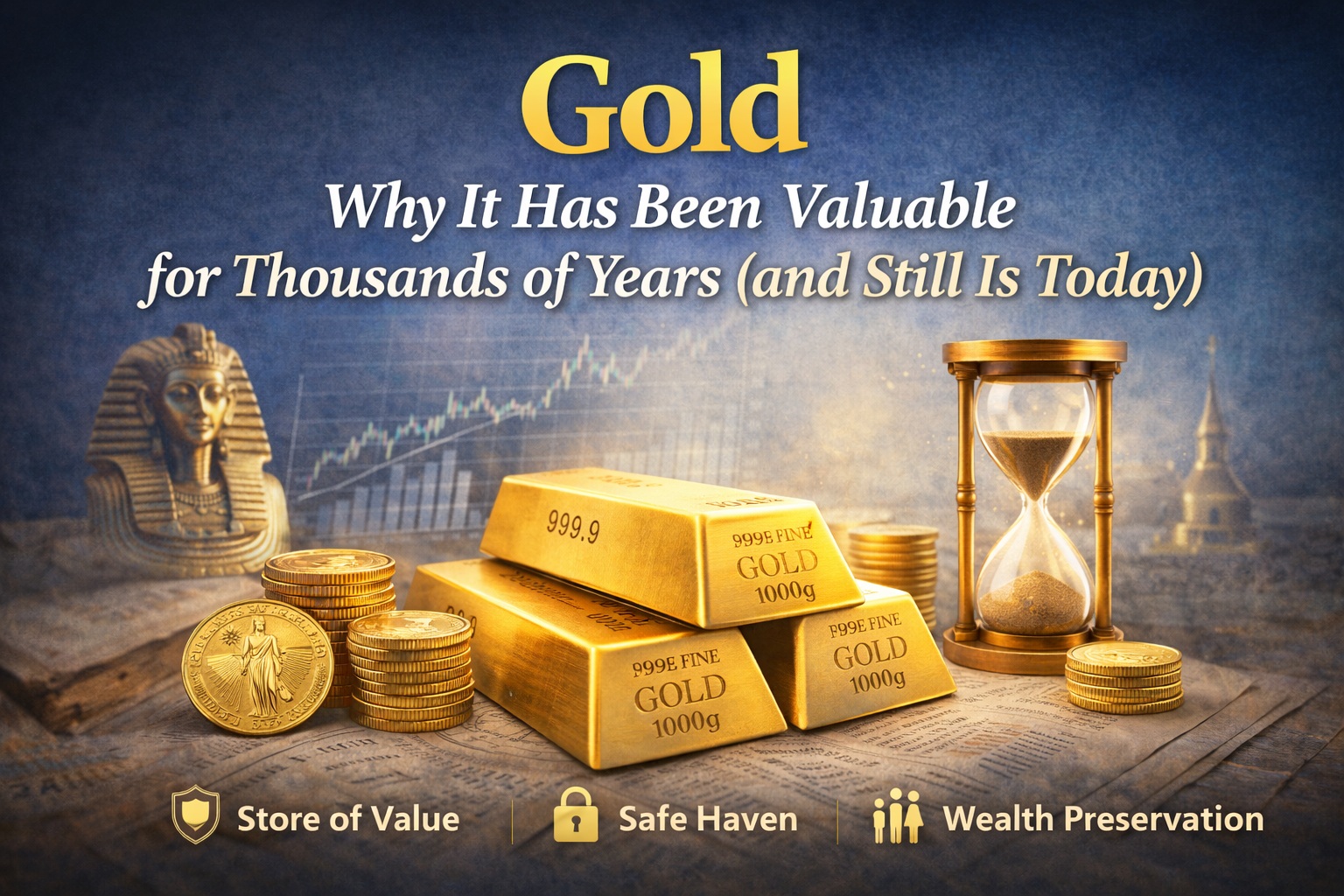
Gold Explained: Why It Has Been Valuable for Thousands of Years, Gold: Why It Has Been Valuable for Thousands of Years (and Still Is Today).
Gold is one of the few things in human history that has never lost its importance. Empires have risen and fallen, currencies have come and gone, and technologies have changed the world—but gold has remained a symbol of value, stability, and trust.
From ancient civilizations to modern financial markets, gold has consistently played a unique role in how people store wealth, protect themselves during uncertainty, and pass value from one generation to the next. This article explores what gold is, why it has always been valuable, and why it continues to matter for people of all ages today.
1. What Is Gold?
Gold is a natural metal that forms in the Earth’s crust. It is rare, durable, and does not rust or corrode. As a result, these simple physical properties explain why gold became so valuable long before modern money existed.
Key characteristics of gold:
- It is scarce, but not impossible to find
- It lasts forever without losing quality
- People can divide gold into small units without losing its value.
- It is easy to recognize and difficult to fake
These qualities made gold ideal as a store of value thousands of years ago—and they still matter today.
2. A Brief History of Gold
Gold in Ancient Times
Ancient Egyptians used gold as early as 3000 BCE. Pharaohs used it for jewelry, religious artifacts, and symbols of power. Other civilizations—including the Greeks, Romans, Chinese, and Incas—also valued gold.
For much of history, gold was not just decorative. It was money.
Gold as Money
Traders widely used gold coins in trade because:
- Everyone agreed on their value
- Merchants could easily carry gold coins across borders.
- They did not depend on a ruler’s promise
Later, many countries adopted the gold standard and backed their paper money with physical gold. Although most countries left the gold standard in the 20th century, gold never lost its importance.
3. Why Gold Has Value
Gold has value for several reasons that go beyond tradition.
1. Scarcity
Gold is limited. It cannot be created artificially in large quantities, and mining it is expensive and slow. This scarcity helps preserve its value over time.
2. Trust
Unlike paper money, gold does not rely on a government or central bank. It is trusted worldwide, regardless of politics or borders.
3. Stability Over Time
Gold does not guarantee quick profits, but it has historically preserved purchasing power over long periods. While currencies may lose value due to inflation, gold has often maintained its worth.
4. Gold in the Modern World
Even today, gold plays an important role in the global financial system.
Central Banks
Central banks around the world hold large gold reserves. They use gold as a backup asset and a symbol of financial strength.
Jewelry and Industry
Gold is widely used in:
- Jewelry
- Electronics
- Medical devices
This real-world demand supports its long-term relevance.
Investment Asset
Gold is commonly used by investors as a store of value and a hedge against uncertainty.
5. Why People Invest in Gold
People invest in gold for different reasons, depending on their goals and stage of life.
Protection Against Inflation
When the cost of living rises and money loses purchasing power, gold has often helped preserve wealth.
Safety During Uncertainty
During wars, financial crises, or economic instability, gold is often seen as a “safe haven.”
Diversification
Gold behaves differently from stocks and bonds. Including it in a portfolio can help reduce overall risk.
6. Different Ways to Own Gold
Gold ownership doesn’t look the same for everyone.
Physical Gold
- Gold coins
- Gold bars
- Jewelry (though often includes craftsmanship costs)
Financial Gold
- Gold ETFs
- Gold-backed funds
- Shares in gold mining companies
Each option has advantages and disadvantages depending on security, liquidity, and personal preference.
7. Is Gold for Everyone?
Gold is not about getting rich quickly. It is about preservation, balance, and long-term thinking.
For:
- Young people: Gold can teach patience and financial discipline
- Families: It can be a way to protect savings
- Older generations: It can help preserve wealth and provide peace of mind
Gold is not an “all or nothing” asset—it works best as part of a broader financial picture.
8. Common Myths About Gold
“Gold Is Old-Fashioned”
Gold may be ancient, but its role is still modern. Central banks, technology companies, and investors continue to rely on it.
“Gold Always Goes Up”
Gold prices can go up and down. Its strength lies in long-term stability, not short-term speculation.
“Gold Replaces Other Investments”
Gold complements other assets—it does not replace them.
9. Gold and the Future
No one can predict the future perfectly, but history shows that gold adapts to change.
As long as people value:
- Trust
- Scarcity
- Stability
gold is likely to remain relevant.
Digital currencies, new technologies, and changing economies may reshape finance—but gold’s role as a universal store of value is unlikely to disappear.
10. Final Thoughts
Gold is more than a metal. It is a bridge between past, present, and future. It has survived empires, wars, economic collapses, and technological revolutions.
For people of all ages, gold offers a simple lesson:
True value is built to last.
That is why gold remains relevant—not just today, but for generations to come.
Gold Explained: Why It Has Been Valuable for Thousands of Years. In this article, you will learn why gold has remained valuable throughout history and why it still matters today as a store of value, an investment, and a symbol of trust.
Understanding the Dynamics Behind Gold Prices
What Is the Stock Market? A Complete Beginner’s Guide
Share this content:














1 comment