Good Debt vs. Bad Debt: What’s the Difference
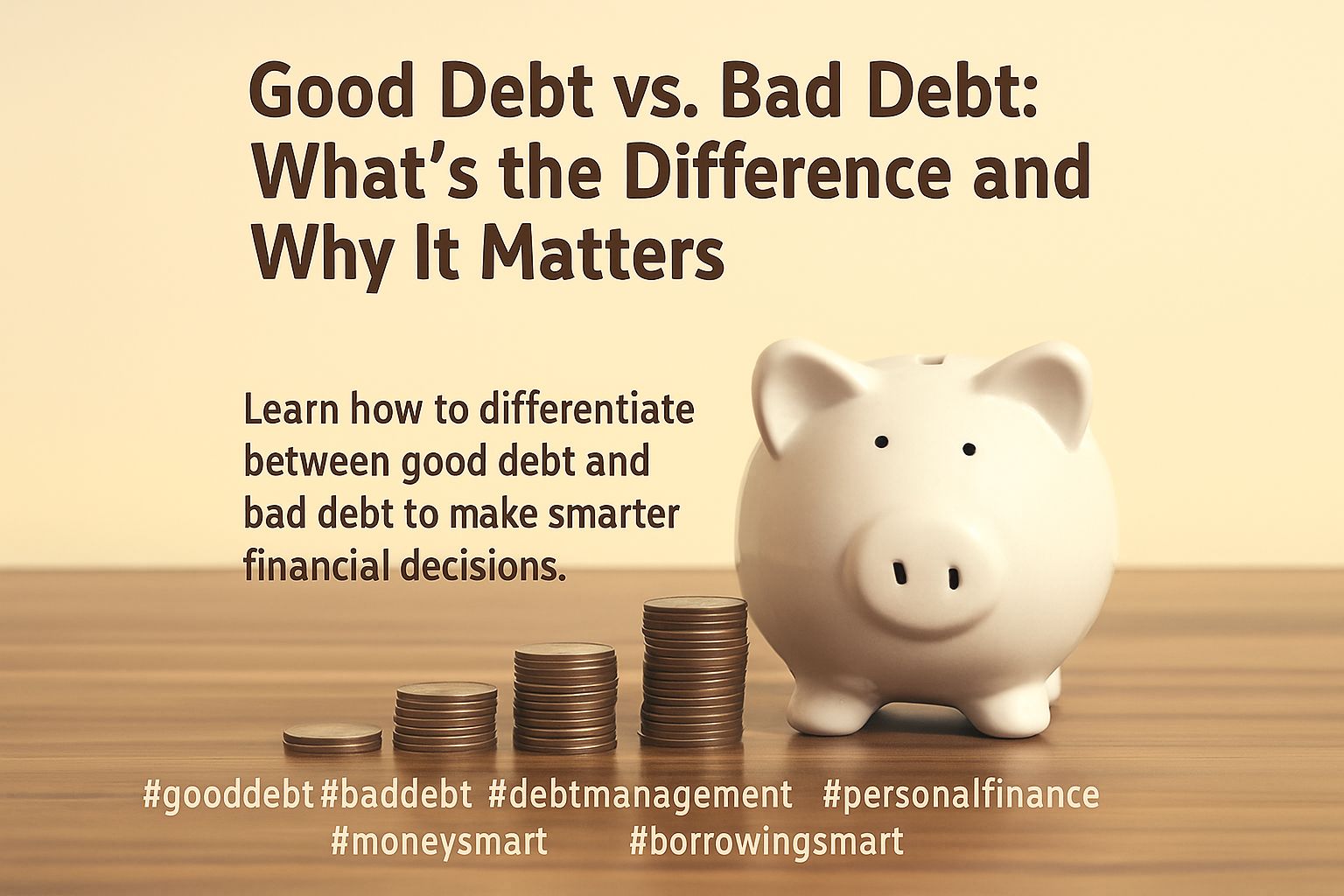
Good Debt vs. Bad Debt: What’s the Difference and Why It Matters
Learn the key differences between good debt and bad debt. Discover how to use credit wisely, build wealth, and avoid financial traps that can keep you stuck in a cycle of stress and repayment.
💡 Understanding the Concept of Debt
Debt isn’t always the villain in your financial story — it’s a tool. Used wisely, it can open doors to education, property, or business ownership. Used recklessly, it can become a heavy chain of obligations and stress.
In modern economies, few people live entirely debt-free. Mortgages, car loans, and credit cards are part of everyday life. The goal isn’t to eliminate debt altogether — it’s to understand which debts help you grow and which ones slowly drain your finances.
This is where the distinction between good debt and bad debt becomes essential.
✅ What Is Good Debt?
Good debt is money borrowed to improve your long-term financial position. It’s an investment in your future — something that can increase your income, build assets, or improve your quality of life sustainably.
Think of it this way: good debt pays you back.
Examples of Good Debt
- Student Loans (When Managed Responsibly)
Education can be one of the best investments you make. A degree or certification often leads to higher lifetime earnings. However, the key is balance — borrowing only what you need and understanding potential job prospects before committing to large loans. - Mortgages
Buying a home is a classic example of good debt because property generally appreciates over time. Instead of paying rent forever, a mortgage allows you to build equity — effectively owning more of your home each month. - Business Loans
Borrowing money to start or expand a business can generate future income and independence. When the borrowed funds are used to purchase equipment, inventory, or marketing that increases revenue, that debt becomes a smart investment. - Investing in Skills or Tools
Sometimes, good debt is about smaller but impactful improvements — like financing professional equipment or training that boosts productivity or income.
Why Good Debt Works in Your Favor
Good debt typically:
- Has lower interest rates and predictable payments.
- Funds an asset that appreciates or generates income.
- Improves your credit history when payments are made on time.
- Builds financial leverage — allowing you to do more with your money.
However, even good debt can become bad if you borrow too much or fail to plan your repayments. Smart management is the real key.
⚠️ What Is Bad Debt?
Bad debt is the opposite — borrowing money for things that lose value quickly or don’t generate any return. It’s the debt that adds stress without improving your financial future.
If good debt pays you back, bad debt makes you pay forever.
Examples of Bad Debt
- High-Interest Credit Card Debt
Using credit cards for shopping, dining, or vacations that you can’t afford leads to compounding interest. A $500 purchase can easily turn into $1,000 or more over time if you make only minimum payments. - Payday Loans
These short-term, high-interest loans are among the worst forms of debt. They can trap borrowers in a cycle where most of each paycheck goes to repaying interest rather than reducing the principal. - Luxury Car Loans or Over-Financing Vehicles
Cars depreciate the moment they leave the dealership. Taking out a long-term loan for a new vehicle, especially beyond your budget, often results in owing more than the car’s actual worth. - Impulse Purchases and Retail Debt
Store credit cards and financing plans for gadgets or clothes are tempting but often carry steep interest rates and short-term gratification that fades long before the bills stop coming.
Why Bad Debt Hurts You
Bad debt typically:
- Has high or variable interest rates.
- Buys depreciating assets or consumables.
- Can damage your credit score if you miss payments.
- Creates a cycle of dependency on credit.
Bad debt doesn’t just cost money — it costs peace of mind.
🔍 How to Tell the Difference Between Good and Bad Debt
Before taking on any new financial obligation, pause and ask yourself these three questions:
- Will this purchase or investment grow in value or increase my income?
If it creates opportunity or equity, it’s leaning toward good debt. - Can I comfortably afford the monthly payments?
Debt that strains your budget or forces you to sacrifice essentials is rarely worth it. - Do I have a clear and realistic repayment plan?
Even good debt becomes toxic if you don’t have a repayment strategy.
If the answer to all three is “yes,” you’re probably making a smart financial move. If any answer is “no,” reconsider.
💰 The Role of Interest Rates and Terms
Interest rates often determine whether a debt remains good or turns bad. For example:
- A low-interest mortgage can help you build wealth through home ownership.
- A high-interest credit card can wipe out savings quickly.
Always read the fine print. Understand the annual percentage rate (APR), payment terms, and potential penalties. Refinancing or consolidating high-interest debt can sometimes turn bad debt into manageable debt.
🧭 Strategies to Manage Debt Wisely
Even with good intentions, debt can pile up. Here are some actionable strategies for smarter debt management:
- Prioritize High-Interest Debt First
Pay off credit cards and payday loans before tackling lower-interest loans. - Use the Snowball or Avalanche Method
- Snowball: Pay off the smallest debt first to build momentum.
- Avalanche: Pay off the highest-interest debt first to save money long-term.
- Consolidate When It Makes Sense
Combining multiple high-interest debts into one lower-rate loan can simplify payments and reduce costs. - Build an Emergency Fund
Having savings prevents you from using credit in emergencies — keeping you from falling into bad debt again. - Budget and Track Spending
Awareness is power. Know where your money goes each month and make adjustments before debt becomes overwhelming.
📊 How Debt Affects Your Credit Score
Your credit score reflects how responsibly you handle debt. Timely payments, low credit utilization, and a mix of credit types (like loans and credit cards) all help build a solid score.
Good debt, when managed well, improves your credit history. Bad debt, especially late payments or defaults, damages it and can limit your future borrowing options.
💬 Final Thoughts: Make Debt Work for You
Debt itself isn’t inherently good or bad — it’s how you use it that determines its impact. The smartest financial decisions involve balance, planning, and discipline.
- Good debt empowers you — it helps you grow, learn, and invest.
- Bad debt enslaves you — it fuels instant gratification at the cost of long-term progress.
By understanding the difference and applying responsible borrowing habits, you can make debt a tool for building wealth instead of a burden that holds you back.
Good Debt vs. Bad Debt: What’s the Difference and Why It Matters
Good debt is borrowing that helps build wealth or long-term value — such as education, property, or business investments. Bad debt involves high-interest borrowing for items that lose value quickly, like credit card purchases or payday loans. The key difference lies in whether the debt contributes to financial growth or drains resources.
good debt, bad debt, debt management, financial literacy, personal finance, credit score, money tips, budgeting, borrowing smart, financial planning, debt consolidation, smart investing, student loans, mortgage, credit card debt.
Share this content:













Post Comment
You must be logged in to post a comment.