Helping Kids Think Like Creators and Problem-Solvers
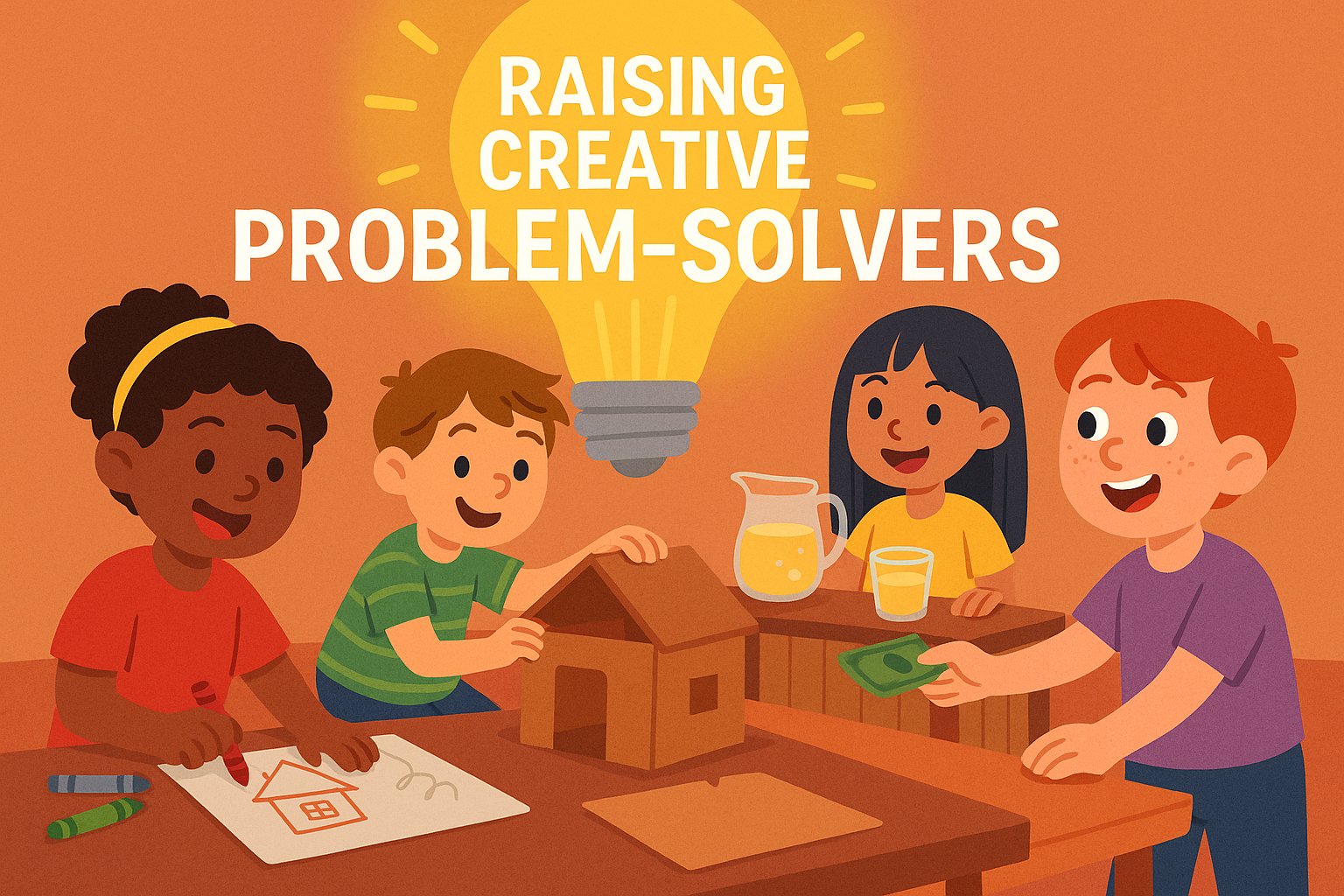
“Helping Kids Think Like Creators and Problem-Solvers, small projects. A guide for parents & teachers to spark young entrepreneurship.”
Short welcome for parents/teachers.
Emphasize why creativity, problem-solving, and small projects build lifelong skills.
Promise them easy, fun activities they can try right away.

1. Idea Sparks: Let Kids Dream Wild
Big Idea: Encourage kids to imagine silly, bold, or “impossible” ideas first — it builds confidence in their creativity.
Story Example:
“Imagine your student wants to invent a backpack that can also fly them to school. Sounds crazy? Perfect! That’s how creativity starts — by dreaming without limits.”
Try it!
- Ask: “If you could make one boring thing more fun, what would you change?”
- Have kids draw or explain their invention.
2. Problem Spotters: Finding Everyday Challenges
Big Idea: Teach kids to notice small problems around them — opportunities are everywhere.
Story Example:
“A child complains their pencils always roll off the desk. That tiny annoyance could spark the idea for a new pencil holder — their first mini-project!”
Try it!
- Take a walk around the classroom or home.
- Write down 3 small problems they notice.
- Pick one and brainstorm silly or serious solutions.
3. Tiny Projects, Big Wins
Big Idea: Starting small helps kids feel capable. They don’t need to build a company — just a project.
Story Example:
“Two students start a mini bookmark-making project. They make 5 bookmarks, share them with friends, and suddenly they’re running a ‘bookmark club.’”
Try it!
- Encourage a 1-day project: bake cookies, design a poster, or make a simple craft.
- Celebrate the effort, not just the results.
4. Share & Shine
Big Idea: Presenting ideas boosts confidence and teaches communication.
Story Example:
“A shy child shows the class their doodle ‘new lunchbox design.’ The applause they get motivates them to keep creating.”
Try it!
- Have a 5-minute “Show & Tell” for projects.
- Ask each child: “What do you like most about your idea?”
Raising Creative Problem-Solvers: A Parent & Teacher’s Guide to Helping Kids Start Small Projects
When we think of entrepreneurs, our minds often jump to business leaders, inventors, or tech geniuses. But the truth is, entrepreneurship isn’t just about making money — it’s about creativity, problem-solving, resilience, and the courage to try new things. And these are skills we can nurture in children from an early age.
Whether you’re a parent or a teacher, you play a powerful role in helping kids see the world not just as it is, but as it could be. The best way to do this? By encouraging kids to think creatively, spot problems, and start small projects.
This guide takes inspiration from playful, child-friendly books like Kidpreneurs but reimagines it for adults who want practical ways to spark creativity in the kids they care about. We’ll break it into big ideas, each with a simple story and a hands-on activity you can try immediately.
Ready? Let’s dive in.

1. Idea Sparks: Let Kids Dream Wild
Kids are natural dreamers. They can imagine worlds where backpacks fly, shoes walk by themselves, or dogs talk in full sentences. Instead of shutting these ideas down as “impractical,” we can embrace them.
When children are encouraged to imagine boldly, they start to believe their ideas matter. This is the root of creativity — the permission to think freely.
Story Example:
Imagine a student who says: “I wish I had a pencil that could do my homework for me.” At first, it might sound silly. But what if that spark leads to the idea of a smarter pencil grip, or a pen with built-in erasers, or even a fun app that helps kids solve problems step by step? Big innovations often start with a “wild” idea that gets refined later.
Try it!
- Ask your child or students: “If you could make one boring thing more fun, what would you change?”
- Encourage them to draw their invention or act it out like a commercial.
- Bonus: Post the drawings on a “Wall of Ideas” so they can see their creativity celebrated.
Why it works:
This exercise tells kids that no idea is too small or too silly. It plants the seed that every change begins with imagination.

2. Problem Spotters: Finding Everyday Challenges
Entrepreneurs don’t just create random products — they solve problems. Helping kids notice everyday challenges teaches them to see opportunities where others see annoyances.
Story Example:
A child notices that their shoelaces keep coming undone during recess. Instead of complaining, you encourage them to think of solutions: Velcro straps, a “lace-locker” clip, or even elastic shoelaces that never need tying. Suddenly, the problem becomes a chance to invent.
Try it!
- Go on a “problem walk” around the classroom, house, or neighborhood.
- Ask kids to write down or sketch three small problems they notice.
- Have them brainstorm at least one fun or creative solution for each.
Why it works:
Kids start to view the world with fresh eyes. They learn that frustration isn’t the end of the story — it’s the beginning of innovation.

3. Tiny Projects, Big Wins
One of the biggest mistakes adults make when teaching entrepreneurship is starting too big. Kids don’t need a business plan or investors. What they need is the confidence that comes from finishing something small.
Story Example:
Two siblings decide to make bookmarks with cardboard, markers, and stickers. At first, they just create five for themselves. Soon, their friends want some too. Without even realizing it, they’ve started their first “mini-business.” The real victory isn’t selling bookmarks — it’s learning that their creativity can bring joy to others.
Try it!
- Encourage kids to start a one-day project: bake cookies for the family, design a class poster, or create a short comic strip.
- The goal is completion, not perfection.
- At the end, celebrate what they made — clap, share photos, or display it proudly.
Why it works:
Success fuels confidence. Even tiny wins show kids that they have the power to create something from nothing. That’s the core of entrepreneurship.

4. Share & Shine: Building Confidence Through Presentation
Great ideas mean little if they’re never shared. When kids present their projects, they learn to explain their thinking, take pride in their work, and build confidence.
Story Example:
A shy student designs a “dream lunchbox” with compartments for hot and cold food. When given the chance to present it in front of the class, their face lights up as classmates clap and ask questions. The validation they receive makes them eager to try again.
Try it!
- Host a 5-minute “Show & Tell” where kids present their project.
- Encourage them to talk about what they liked most about the process.
- If in a classroom, let peers ask one supportive question.
Why it works:
Public speaking and confidence go hand in hand. By sharing their ideas in a safe environment, kids feel valued and encouraged to keep experimenting.

5. The Power of Play: Learning Without Pressure
Adults often forget that kids learn best through play. Creativity isn’t built through lectures — it grows when kids are free to experiment, mess up, and try again.
Story Example:
A group of kids play a “store game” where they set up a pretend shop with toy money. In the process, they learn about pricing, negotiation, and customer service — all while laughing and having fun.
Try it!
- Create a playful scenario: a pretend café, a market stall, or even a “shark tank” for silly inventions.
- Let kids role-play as inventors, sellers, and customers.
- Emphasize fun, not results.
Why it works:
Play removes pressure. Kids learn serious skills — teamwork, problem-solving, creativity — without even realizing it.

6. Mistakes as Superpowers
Many kids (and adults) fear failure. But mistakes are the best teachers. Teaching kids to embrace failure as part of the process prepares them for resilience later in life.
Story Example:
A child tries to make slime but ends up with a sticky mess. Instead of calling it a failure, you ask: “What did you learn? What would you try differently next time?” Suddenly, the “failed slime” is just a first experiment — not the end.
Try it!
- Introduce a “Favorite Mistake” activity where kids share something that didn’t work.
- Ask: “What surprised you? What could you change?”
- Celebrate the courage it takes to share.
Why it works:
Kids begin to see mistakes as steps, not setbacks. This builds resilience and a growth mindset — qualities every entrepreneur needs.

7. Teamwork Makes the Dream Work
Entrepreneurship isn’t a solo sport. Kids need chances to collaborate, share roles, and combine strengths.
Story Example:
In a classroom project, one student designs posters, another handles money, and another talks to “customers.” Each child contributes in a way that matches their strengths — and together, they run a mini lemonade stand.
Try it!
- Give kids a group challenge, like creating a class magazine or hosting a mini-market day.
- Assign roles so everyone has a part to play.
- Reflect afterward: “What worked best when you worked together?”
Why it works:
Teamwork teaches leadership, compromise, and empathy. Kids learn that collaboration makes projects stronger.

8. Celebrate Effort, Not Just Results
Entrepreneurship is a long journey. The most valuable lesson kids can learn is that effort and persistence matter more than instant success.
Story Example:
A child tries selling homemade bracelets but only gives away two. Instead of focusing on the “sales,” the parent celebrates their creativity, organization, and courage to try. That encouragement motivates them to try again next time.
Try it!
- After each project, ask kids: “What was your favorite part of this?” and “What would you try next?”
- Celebrate progress, effort, and creativity — not just the outcome.
Why it works:
Kids build confidence in the process itself, not just in external rewards. This mindset encourages lifelong learning and experimentation.
Bringing It All Together
Helping kids become creative problem-solvers doesn’t require fancy tools or big budgets. It’s about fostering:
- Imagination (let them dream big)
- Observation (help them notice small problems)
- Action (encourage tiny projects)
- Expression (give them space to share ideas)
- Resilience (celebrate mistakes as part of learning)
- Teamwork (show them the power of collaboration)
As parents and teachers, you have the power to create an environment where kids feel safe to try, fail, and try again. By guiding them through small, playful projects, you’re planting the seeds of creativity, confidence, and maybe even future entrepreneurship.
And remember: It’s not about raising the next CEO. It’s about raising curious, resilient kids who believe in their ability to shape the world around them.
That’s the true gift of entrepreneurship.
Share this content:














Post Comment
You must be logged in to post a comment.