The No-Spend Challenge Transform Your Finances
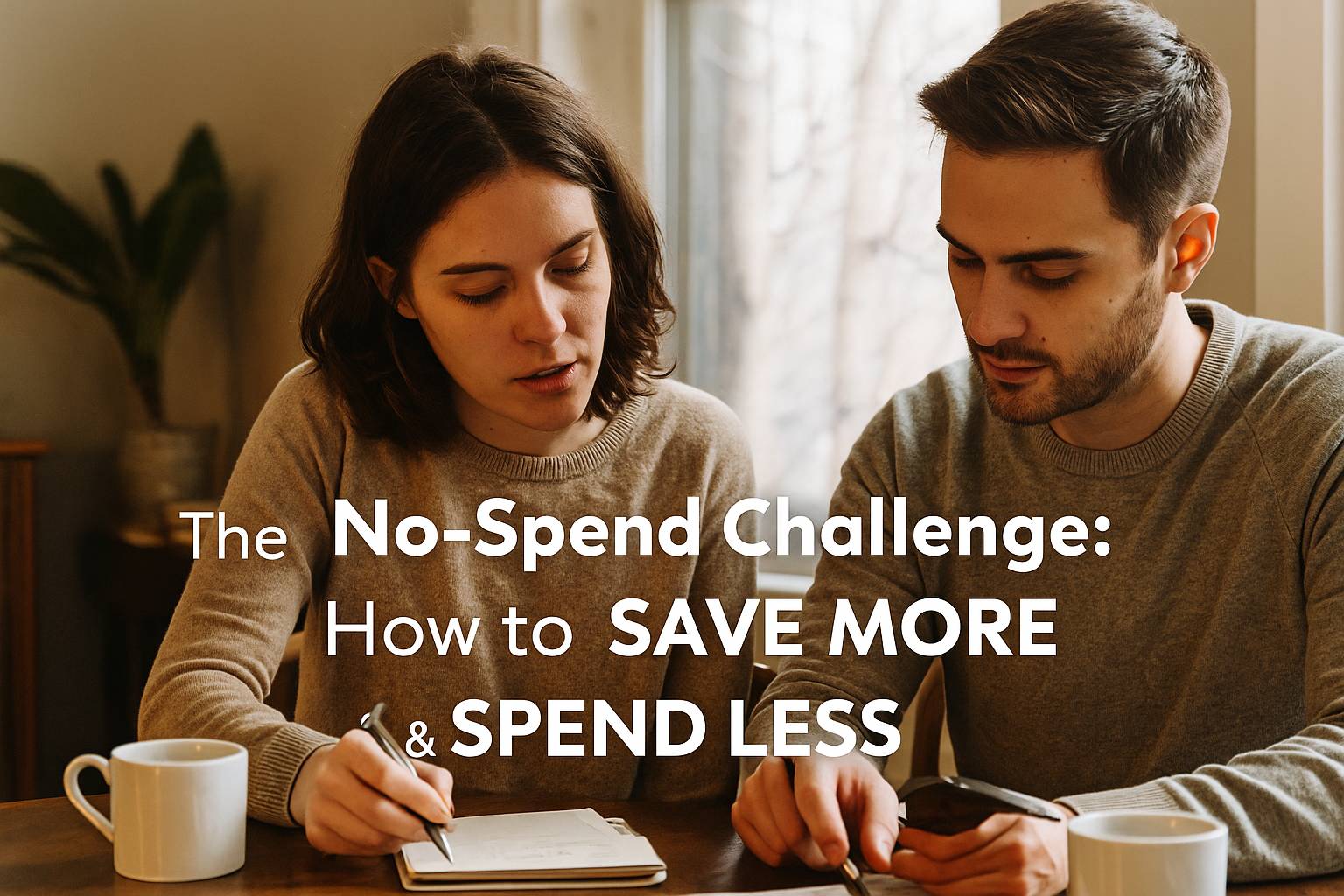
The No-Spend Challenge Transform Your Finances in 2025
SEO Keywords: no-spend challenge, no-buy challenge, save money fast, budgeting trends 2025, minimalist budgeting, money saving tips
Introduction: Why People are Skipping Spending in 2025
Imagine deciding that for one month, you won’t buy anything that isn’t absolutely essential. No new clothes. No extra coffee runs. Cero impulse Amazon purchases at midnight.
Sounds tough, right?
That’s exactly what the No-Spend (or No-Buy) Challenge is all about. It’s one of the most popular budgeting trends in 2025, and for good reason: it helps people reset their relationship with money, curb impulse spending, and save for goals that really matter.
In a world where advertising constantly pushes us to buy more, a no-spend challenge is a way to step back, take control, and prove to yourself that you can live with less.
What is a No-Spend / No-Buy Challenge?
A No-Spend Challenge is a set period of time (a week, a month, or even a year) where you commit to not spending money on anything non-essential.
A No-Buy Challenge is similar, but usually focuses on avoiding specific categories — like no clothes for six months, no tech gadgets for a year, or no eating out for 30 days.
Allowed Spending (essentials):
- Rent or mortgage
- Utilities
- Groceries
- Transportation
- Medical needs
Not Allowed (non-essentials):
- Eating out
- Clothing (unless a true necessity)
- Entertainment subscriptions
- Impulse online shopping
Why It’s Trending Now
- Economic Uncertainty – People are looking for ways to stretch their dollars.
- Minimalist Lifestyle Movement – Many want to declutter both their homes and finances.
- Social Media Influence – TikTok creators are sharing their no-spend journeys, making it a viral challenge.
- Mental Reset – It’s not just about money; it’s about breaking the habit of mindless consumption.
Benefits of a No-Spend Challenge
- Instant Savings Boost – Even a week without takeout or shopping can save $100+.
- Resets Habits – You become more intentional with money.
- Reduces Clutter – Buying less means accumulating less.
- Encourages Creativity – You’ll find new ways to cook, entertain yourself, or spend time with friends.
- Builds Financial Confidence – You prove to yourself that you don’t “need” constant spending.
How to Start a No-Spend Challenge
Step 1: Define Your Timeframe
- Beginners: 7 days
- Intermediate: 30 days
- Advanced: 3–12 months (often “no-buy year” challenges)
2: Set Clear Rules
- Essentials only.
- Decide what counts as an “allowed exception” (ex: a friend’s wedding gift).
3: Tell Someone (or Post Online)
Accountability helps — whether it’s a friend, family member, or social media.
Step 4: Prepare Alternatives
- Instead of eating out → cook at home or host potlucks.
- Instead of buying books → use your local library.
- Instead of new clothes → organize a clothing swap.
Step 5: Track Savings Progress
Write down how much you would’ve spent and transfer that amount into savings.
Real-Life Example
Alex, 32, decided to do a 30-day no-spend challenge in January 2025.
- Usual spending: $300 on dining out, $150 on impulse online shopping, $80 on entertainment subscriptions.
- During the challenge: He cooked at home, canceled unused subscriptions, and avoided shopping apps.
- Savings: $530 in one month.
By the end, Alex didn’t just have extra savings — he also realized how many purchases he didn’t actually need.
Common Struggles (and How to Overcome Them)
- FOMO (Fear of Missing Out): Replace expensive social plans with free activities like hiking, movie nights at home, or park picnics.
- Impulse Triggers: Unsubscribe from marketing emails and delete shopping apps.
- All-or-Nothing Thinking: If you slip up once, don’t quit — keep going.
Final Thoughts: Is a No-Spend Challenge Right for You?
A no-spend challenge is more than a financial experiment — it’s a lifestyle reset. Even if you only do it for a week, you’ll likely discover:
- how much of your spending is habit-based,
- how much joy you can get from non-monetary activities,
- and how quickly savings add up when you stop impulse purchases.
The No-Spend Challenge Transform Your Finances.
In a world where “more” is often the goal, the no-spend challenge reminds us that less can actually give us more freedom.
So whether you start with one weekend or commit to a whole month, give it a try. Your bank account — and your mindset — will thank you.
Share this content:












Post Comment
You must be logged in to post a comment.