Understanding Financial Assets and Liabilities
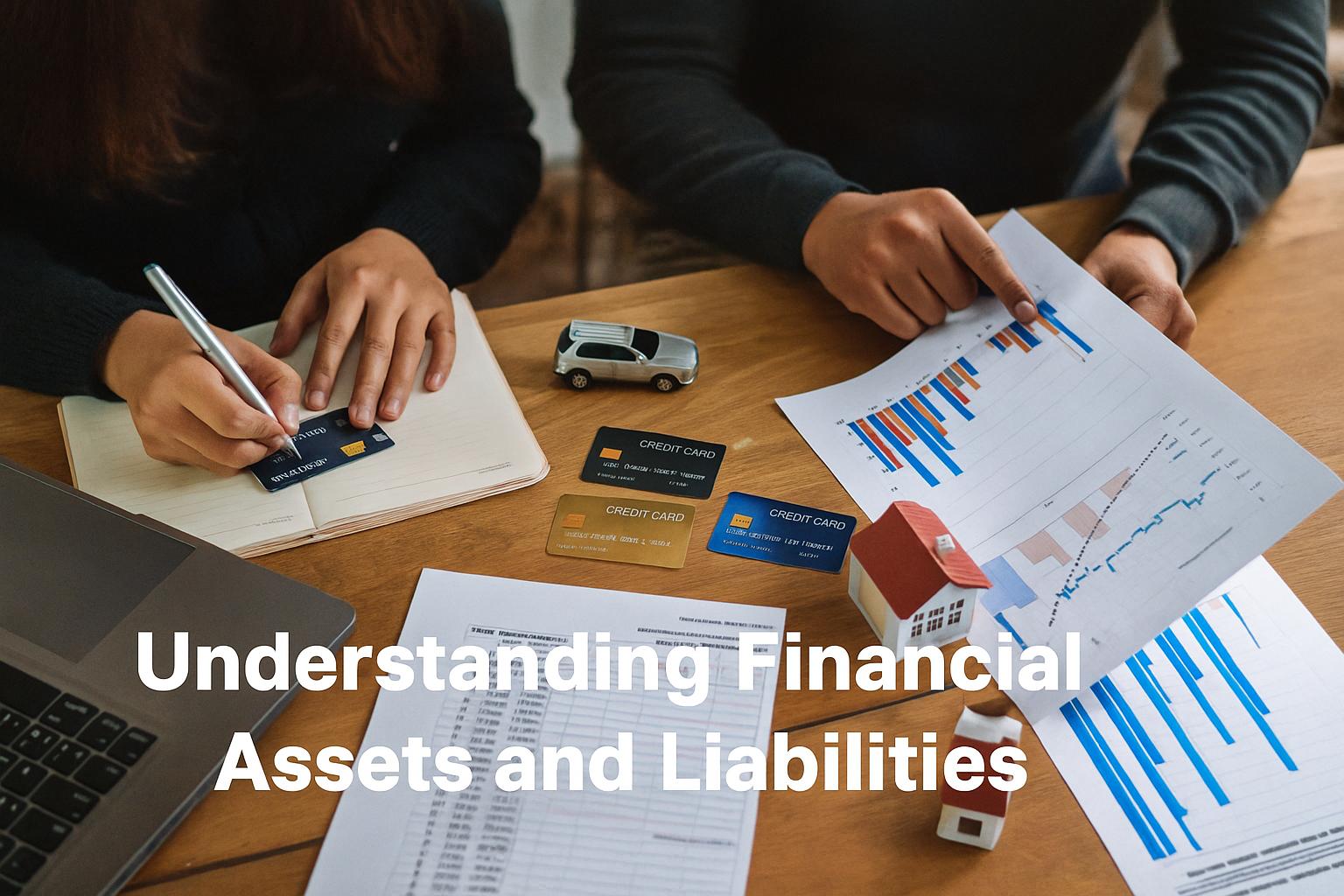
Understanding Financial Assets and Liabilities: The Building Blocks of Your Financial Life
Learn what financial assets and liabilities are, how they work, and why understanding them can transform your personal finances and investments.
🏦 Why You Should Care About Assets and Liabilities
If you want to understand money — really understand it — you need to start with two key concepts: financial assets and financial liabilities.
These two terms form the foundation of everything in finance. Whether you’re managing your own budget, running a business, or investing in stocks, every financial decision you make affects one of these two categories.
In simple terms:
- Assets are what you own or what others owe you.
- Liabilities are what you owe to others.
Sounds easy, right? But behind this simplicity lies the key to understanding wealth, debt, and financial health. Let’s dive deeper into what they mean, how they work, and how to use them to improve your financial life.
💵 What Are Financial Assets?
A financial asset is something that holds monetary value and can generate income, profits, or future cash flow.
Think of it as a claim to future money. You don’t necessarily need to have physical gold or property in your hands — financial assets are often intangible, like the balance in your savings account or the shares you own in a company.
📘 Common Types of Financial Assets:
- Cash and Cash Equivalents
- The simplest and most liquid form of assets.
- Examples: physical cash, money in checking accounts, or short-term deposits.
- Stocks (Equity Securities)
- Represent ownership in a company.
- When the company earns profits, you may get dividends, and your shares can rise in value.
- Bonds (Debt Securities)
- These are loans you give to a company or government.
- They promise to pay you back with interest — a predictable stream of income.
- Mutual Funds and ETFs
- Pools of money invested in various assets to diversify and reduce risk.
- Receivables
- Money others owe you — for example, when a client hasn’t yet paid your invoice.
- Bank Deposits or Certificates of Deposit (CDs)
- These earn interest over time, offering stability and guaranteed returns.
In short, financial assets are anything that adds to your wealth and can be converted into cash or future income.
📉 What Are Financial Liabilities?
A financial liability is a debt or obligation — money that you are required to pay in the future.
It’s a promise to give someone else money, often with interest. Liabilities reduce your net worth, but they’re not always bad. Some liabilities (like a mortgage or business loan) can help you grow if used wisely.
📕 Common Types of Financial Liabilities:
- Loans and Mortgages
- Money borrowed from a bank or financial institution to buy property, cars, or start a business.
- Credit Card Debt
- A revolving line of credit that, if unpaid, can accumulate high-interest charges.
- Student Loans
- Money borrowed for education, typically repaid with interest over time.
- Business Debts
- Liabilities a company takes on to fund operations, purchase inventory, or expand.
- Bonds Issued by a Company
- When companies raise money by selling bonds, they owe investors both the principal and interest.
- Accounts Payable
- Short-term debts owed to suppliers or service providers.
In short:
A financial liability takes money out of your pocket, either now or in the future.
⚖️ Assets and Liabilities: Two Sides of the Same Coin
Every financial transaction creates both an asset and a liability somewhere in the economy.
For example:
- When you buy a government bond, you own a financial asset (you’ll get paid later).
- For the government, that same bond is a financial liability (it must pay you back).
So one person’s asset is always someone else’s liability.
This relationship is what makes the financial system work — it connects lenders and borrowers, investors and companies, consumers and banks.
🧮 How They Appear in Accounting
If you’ve ever looked at a balance sheet, you’ve seen how assets and liabilities work in business:
Assets = Liabilities + Equity
This formula shows that everything a business owns (its assets) is financed by what it owes (liabilities) and what owners invested (equity).
Example:
| Category | Description | Example |
|---|---|---|
| Assets | What the company owns | Cash, accounts receivable, equipment |
| Liabilities | What the company owes | Loans, accounts payable, bonds |
| Equity | Owner’s share | Share capital, retained earnings |
For individuals, it’s similar:
- Assets are your cash, savings, property, and investments.
- Liabilities are your debts, credit card balances, and mortgages.
Your net worth is simply:
Net Worth = Total Assets – Total Liabilities
💡 Why Understanding This Matters
Knowing the difference between assets and liabilities is essential for building wealth and avoiding financial stress.
Here’s why it matters:
1. It helps you make smarter financial decisions.
When you understand what builds wealth (assets) versus what drains it (liabilities), you can make better spending and investing choices.
2. It’s the foundation of personal finance.
Every budgeting app, every investment plan, every wealth-building book — they all revolve around managing your assets and liabilities.
3. It shows your financial health.
Banks, investors, and even you can evaluate your financial stability by checking your asset-to-liability ratio.
4. It explains how money moves in the economy.
The global financial system is built on this relationship — borrowers take on liabilities to fund investments, which become assets for lenders and investors.
🧠 Real-Life Example: You vs. the Bank
Let’s say you take out a $200,000 mortgage to buy a house:
| For You | For the Bank |
|---|---|
| The house is your asset (it has value). | The mortgage loan is the bank’s asset (you owe them). |
| The mortgage is your liability (you must repay it). | The deposit they gave you is their liability (they lent out funds). |
So, every loan is both an asset and a liability — it just depends on whose perspective you take.
🧩 The Balance Between Assets and Liabilities
A healthy financial life is about balance.
Having assets is great, but too many liabilities can sink you.
Here’s how to keep control:
✅ Build Good Assets
- Invest in things that grow in value: education, skills, property, and investments.
- Save money regularly to create a financial cushion.
❌ Limit Bad Liabilities
- Avoid unnecessary debt (especially high-interest credit cards).
- Borrow only for things that improve your long-term value — not short-term pleasure.
📈 Turning Liabilities into Assets
Sometimes, a liability can help create an asset.
For example:
- A student loan is a liability, but it can lead to higher income (a long-term asset).
- A business loan can create new opportunities and profits.
The key is managing your debts wisely so they produce more value than they cost.
🌍 The Big Picture: Assets and Liabilities in the Economy
On a national scale, the same concepts apply:
- Governments hold assets (like infrastructure and reserves).
- They also have liabilities (like public debt).
Financial markets exist to trade these assets and liabilities — connecting savers with borrowers, investors with businesses, and individuals with opportunities.
🏁 Conclusion: Your Financial Blueprint
Understanding financial assets and liabilities isn’t just for accountants — it’s the key to mastering your personal finances.
When you know what adds to your wealth and what takes away from it, you gain control over your financial future.
To summarize: Understanding Financial Assets and Liabilities: The Building Blocks of Your Financial Life.
- Financial assets build your wealth.
- Financial liabilities reduce it.
- Managing both wisely helps you grow, stay secure, and live with financial confidence.
So next time you make a money decision — whether it’s buying a car, taking a loan, or investing — ask yourself one simple question:
“Is this an asset that adds value, or a liability that takes it away?”
Share this content:














Post Comment
You must be logged in to post a comment.