What Money Really Is: Understanding the True Power
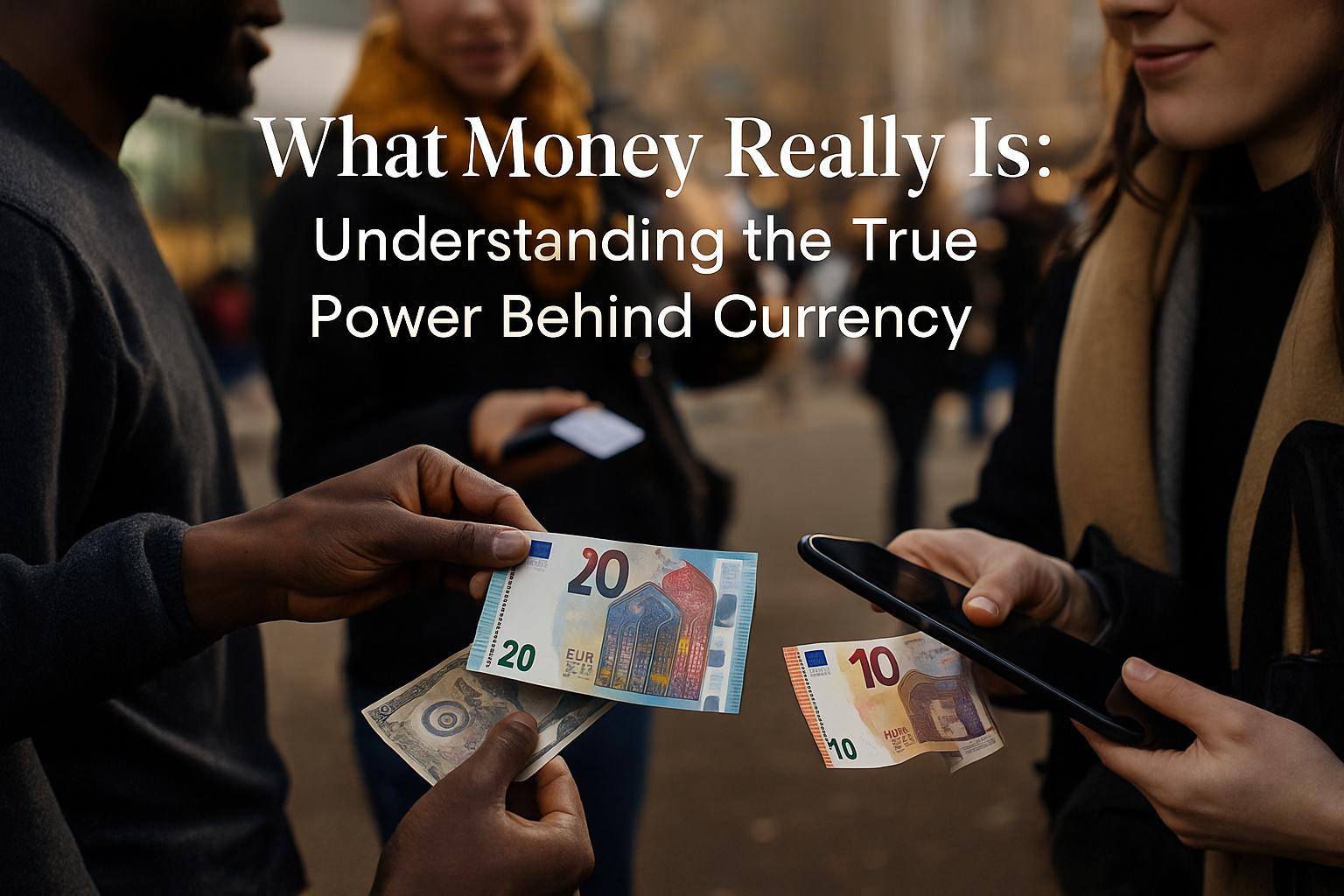
What Money Really Is: Understanding the True Power Behind Paper, Coins, and Code
Discover what money really is — beyond coins and paper. Learn how trust, psychology, and value make money work in our modern world of banking and digital finance.
The Myth of Money
What is money, really?
Most people think of money as those bills in your wallet or numbers in your bank account. But money is much more than that — it’s a shared illusion, a social technology, and one of humanity’s most transformative inventions.
Money isn’t valuable because of what it’s made of — paper, metal, or pixels — but because of what it represents: trust, value, and exchange.
Let’s break down what money really is, why it matters, and how it has evolved from ancient trade to today’s digital economy.
1. Money Is a Social Agreement
At its heart, money is simply a system of trust.
It works because everyone agrees that it works.
If you hand someone a $20 bill, they accept it not because it’s magical, but because they know that others — stores, governments, and banks — will accept it too. This shared belief is the foundation of the modern economy.
In other words, money is a social contract — an invisible promise that the piece of paper (or line of code) in your hand represents value you can use later.
2. The Three Functions of Money
Economists define money by its three key functions:
a) Medium of Exchange
Money allows us to trade without barter. Instead of swapping chickens for shoes, we use a neutral, widely accepted token — money — to make trade efficient and fair.
b) Unit of Account
Money provides a standard measure for prices and value. It allows you to compare things: a book costs $10, a meal costs $20 — easy math, no goats required.
c) Store of Value
Money lets you save purchasing power for the future. If you earn $100 today, you can spend it tomorrow — assuming inflation doesn’t erode its value too much.
These three roles make money the lifeblood of any economy — the oil that keeps trade, investment, and growth running smoothly.
3. The Evolution of Money
Money has evolved through four major stages:
1. Commodity Money
The earliest forms of money were things with intrinsic value — gold, silver, salt, shells, and even cattle. People trusted them because they were rare and useful.
2. Representative Money
Eventually, carrying bags of gold became impractical. Governments began issuing paper notes that represented a claim on gold or silver held in a vault.
3. Fiat Money
In the 20th century, most countries abandoned the gold standard. Modern currencies, like the U.S. dollar or euro, became fiat money — valuable not because they’re backed by gold, but because governments and people believe in them.
4. Digital and Cryptocurrencies
Now, money increasingly exists as data — in bank accounts, apps, and blockchains. Cryptocurrencies like Bitcoin represent a new, decentralized form of trust — one that relies on code and mathematics instead of governments.
4. The Power of Trust
Money’s power comes entirely from collective trust.
Without belief, a currency collapses.
When trust disappears — as seen in cases of hyperinflation (like Zimbabwe or Venezuela) — money loses its meaning. People revert to barter or start using foreign currencies.
That’s why stable governments, sound banking systems, and low inflation are essential. They protect the very belief that gives money life.
5. How Money Is Created
Here’s the twist: most of the money you think exists — doesn’t physically exist at all.
- Central banks (like the Federal Reserve or European Central Bank) issue base money: coins, notes, and reserves.
- Commercial banks create most money when they make loans. When you borrow to buy a car or house, new money is created as a digital entry in your account.
This process, called fractional-reserve banking, allows economies to grow — but it also means that money is largely credit: a promise to repay.
So modern money isn’t gold or paper — it’s debt, data, and trust.
6. Money vs. Wealth: A Vital Distinction
Here’s where people get confused.
Money is a measure of value.
Wealth is the actual value — the stuff money can buy: food, housing, technology, freedom, health, and time.
You can have a lot of money and still not be truly wealthy if your purchasing power is eroding or your needs aren’t met.
Conversely, a society can be wealthy in resources, knowledge, and happiness — even if it doesn’t have much “money” per se.
Money is only a symbol of value — not value itself.
7. The Psychology of Money
Money isn’t just an economic tool — it’s deeply psychological.
We attach emotion, identity, and security to it. Behavioral economists have shown that people are often irrational about money:
- We feel losses more strongly than gains.
- We treat “bonus money” differently than salary.
- We often spend emotionally, not logically.
This emotional relationship shapes markets, investment bubbles, and even global crises. The 2008 financial crash, for instance, wasn’t just a numbers problem — it was a story of trust, greed, and fear.
8. Inflation, Value, and Time
Over time, money tends to lose value due to inflation — the gradual rise in prices.
Inflation isn’t always bad; a little can encourage spending and growth. But when it’s high, money stops being a good store of value.
That’s why people invest in assets — like real estate, stocks, or commodities — which hold or increase value as money depreciates.
In essence, holding cash means trading stability for flexibility — it’s safe and liquid, but slowly melts in value.
9. The Future of Money
The concept of money is evolving faster than ever.
We’re entering an era of digital and programmable money:
- Central Bank Digital Currencies (CBDCs): Government-issued digital versions of traditional money.
- Cryptocurrencies: Decentralized, global, and borderless — based on blockchain technology.
- Cashless economies: More people using phones and digital wallets instead of physical cash.
These trends raise big questions about privacy, freedom, and control — because whoever controls money, controls power.
10. So… What Is Money, Really?
Money is not just metal or code.
It’s a shared story — a collective agreement that something represents value.
a bridge between human needs and human cooperation.
It’s the world’s most successful shared fiction — one that connects strangers, drives civilization, and powers everything from your morning coffee to global trade.
Conclusion: The Meaning of Money
In the end, money is both incredibly simple and infinitely complex.
It’s a tool — one we created to trade, save, and build.
It’s a language of value.
And it’s a mirror of human trust.
As technology changes and new forms of money emerge, one thing remains constant:
Money will always be what we believe it to be — a reflection of our collective faith in the future.
What Money Really Is: Understanding the True Power
Share this content:












Post Comment
You must be logged in to post a comment.