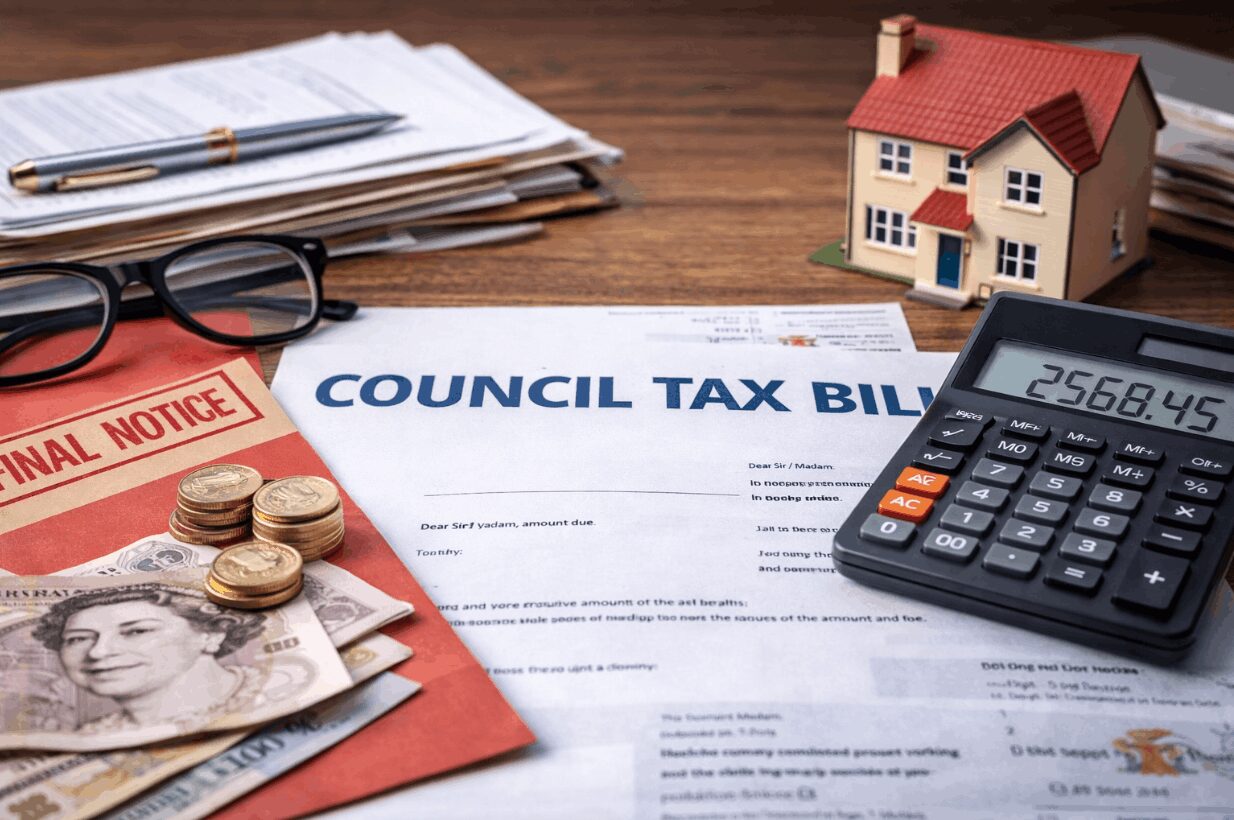

Council Tax in 2026: key figures
The average Band D Council Tax set by local authorities in England for 2026‑27 is £2,392, which is £111 or 4.9 % higher than the previous year. In Wales the average Band D bill for the same period is £2,283, an increase of £113 or 5.2 %. Northern Ireland continues to use domestic rates rather than Council Tax, while Scotland operates its own system with separate policy decisions.
What Council Tax pays for
Council Tax funds a wide range of local services that keep communities functioning. Typical charges cover rubbish and recycling collections, street cleaning and lighting, road upkeep and some local transport costs, libraries, parks and community spaces, adult social care and children’s services, local administration, and contributions to police and fire services.
Why Council Tax has risen again
The rise is driven by growing pressure on care services, inflation increasing councils’ running costs, ongoing staffing and wage pressures, and limited alternative income streams for local authorities. Additional charges from police, fire and parish councils can also add to the final bill.
How your bill is calculated
Two main factors shape your Council Tax bill: the valuation band of your property and the circumstances of the people living there.
Property band basis
In England and Scotland bands are based on a property’s value on 1 April 1991. In Wales the reference date is 1 April 2003. The band reflects historic value, not today’s market price.
Household circumstances
A standard bill assumes at least two adults live in the home. If only one adult is counted for Council Tax purposes a discount may apply, and if nobody counts the property could be exempt in certain situations.
Discounts and reductions you might miss
Many households overpay because they are unaware of available reliefs. Checking eligibility can lead to substantial savings.
Single person discount
If you live alone you are usually entitled to a 25 % discount on your bill.
Council Tax Reduction
This is the main means‑tested support for people on low incomes or receiving certain benefits. Each council runs its own scheme, so the amount of reduction varies locally.
Student exemptions and discounts
When every occupant is a qualifying full‑time student the property may be exempt from Council Tax altogether. Mixed households can still receive a discount depending on who is counted.
Disabled band reduction
If your home has been adapted or includes features a disabled resident needs – such as an extra room or sufficient indoor space for a wheelchair – you may qualify for a reduction.
Severe mental impairment discount
Some households can claim a reduction when a resident is classed as severely mentally impaired and receives a qualifying benefit. This relief is often overlooked.
Other ways to lower the bill
Additional options include local hardship or discretionary support schemes, and in some areas councils offer temporary help for households facing sudden financial shocks.
The £150 Council Tax rebate – what you need to know
The well‑known £150 Council Tax rebate was a one‑off support payment announced in England in 2022 to help with energy bills. It was not designed as a permanent annual rebate, and there is no universal £150 rebate available for 2026. Some councils may still offer hardship assistance, but that is separate from the original national scheme.
Crisis and Resilience Fund (2026‑2029)
From 1 April 2026 to 31 March 2029 the government is running a Crisis and Resilience Fund to aid low‑income households experiencing financial shocks. The fund is delivered locally, so eligibility and application processes differ by council.
If you cannot afford to pay
Acting early is essential because Council Tax is treated as a priority debt. Start by verifying that your bill is correct and that your household details are accurate. Then apply for every discount you may qualify for, check whether you are eligible for Council Tax Reduction, and ask your council if you can spread payments over 12 months instead of the usual 10 – this can reduce the monthly burden. Finally, enquire about any local hardship support that might be available and do not ignore reminder letters or formal notices.
What happens if you miss payments
Falling behind on Council Tax can lead to a rapid escalation. Consequences typically begin with reminder notices, followed by the loss of the right to pay by monthly instalments, a demand for a larger balance (sometimes the remainder of the year’s bill), court action and a liability order, deductions from wages or certain benefits, and ultimately enforcement action.
The arrears process step by step
You miss an instalment, the council sends a reminder, you may lose the right to continue paying monthly, the council can demand a bigger amount – often the rest of the year’s bill – the case can go to court for a liability order, and once that order is granted recovery action can intensify.
Can you challenge your Council Tax band?
Yes, you can ask for a review of your band if you believe it is incorrect. The process is based on the historic valuation dates (1 April 1991 for England and Scotland, 1 April 2003 for Wales) and your band could stay the same, be lowered, or even be raised. You should continue paying your bill while the review is underway.
Before you challenge
Compare your band with similar properties nearby, remember that the valuation date is historic, keep paying during the review, and be aware that a reassessment can go either up or down.
Staying on top of Council Tax all year
Rather than waiting for the annual bill, treat Council Tax as something to review whenever your circumstances change. A new occupant, a shift in income, a child turning adult, a household member becoming a student, disabled person, or qualifying for a benefit are all triggers that might alter your bill.
Your Council Tax checklist for 2026
Check the bill when it arrives and verify that your band looks correct, review every discount and reduction you may be entitled to, do not assume the old £150 rebate still exists, ask about local hardship support if money is tight, contact the council early if the bill is becoming unmanageable, and avoid letting arrears drift into court action.
Final word
Council Tax in 2026 is higher again, often confusing in detail, and far less forgiving than many expect if payments are missed. However, careful checking can genuinely save money – whether through a discount, a means‑tested reduction, local support, or simply catching a problem early before it escalates. The biggest mistake is assuming the bill is fixed and there is nothing to be done; in reality there is often flexibility at the front end, while the consequences of delay can be severe.