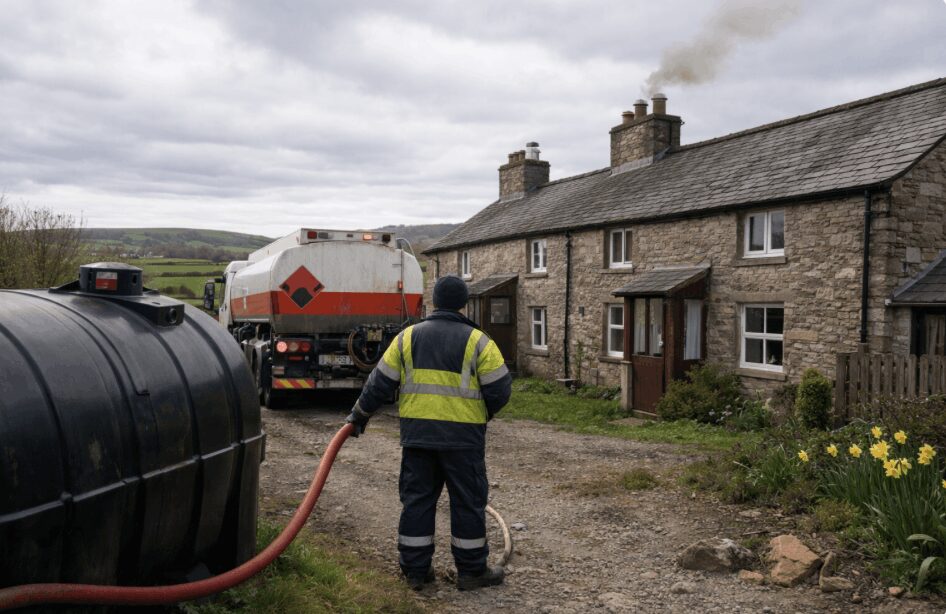

Heating oil prices are surging – what’s behind the rise?
Heating oil costs have climbed sharply in recent months, tracking the jump in global crude prices. Conflict in the Middle East and disruptions around the Strait of Hormuz have tightened supply, pushing wholesale kerosene – the base for heating oil – higher. Because domestic heating oil is tied to these wholesale moves, retail prices follow almost immediately.
Why rural households feel the pinch more acutely
Unlike mains gas and electricity, heating oil is sold through a fragmented private market. There is no price cap protecting off‑grid homes, so suppliers can adjust rates quickly when wholesale costs spike. Rural homes often rely on large, one‑off deliveries, meaning they must buy at whatever price prevails at the moment of refill, exposing them to sudden shocks.
Are suppliers charging for oil they already have?
Many suppliers base their prices on replacement cost rather than what they paid for existing stock. In a rising market, they charge what it would cost to buy new oil today, even if some of the fuel in the tank was purchased earlier at a lower rate. This practice can amplify price increases for consumers, although it is not automatically unfair.
Will heating oil prices fall soon?
If global tensions ease and crude markets stabilise, heating oil should eventually retreat. However, retail prices tend to drop more slowly than they rise, especially where local competition is limited. Volatility may persist through spring and into early summer if supply concerns remain.
Practical steps to cut costs
Shop around and obtain at least three quotes before each delivery, as prices can vary widely between firms. Ask about any hidden fees such as VAT, service charges or delivery surcharges. If your tank allows, consider a smaller order to avoid locking in the highest price. Avoid urgent deliveries when possible, since they often carry a premium. Joining a local oil‑buying club can give you stronger bargaining power through bulk purchasing. Finally, check whether any support schemes are available in your area before you commit to a fill.
Help that may be available – but you usually need to apply
A new £50 million+ support fund has been set up for heating oil users, but the money is not paid out automatically; households must apply to receive it. Many councils now offer emergency assistance, including crisis grants, partial payments towards deliveries or short‑term hardship funds for those at risk of running out of oil. Cold Weather Payments provide £25 for each seven‑day period of freezing temperatures if you receive certain benefits. Older households may qualify for the Winter Fuel Payment, which ranges from £100 to £300 each winter. Additional help can come from local council hardship programmes, fuel vouchers, fuel banks and charitable grants aimed at energy costs.
What to do if you’re struggling
Contact your local council and ask specifically about heating oil support schemes. Speak with Citizens Advice or a similar advice service for a full benefits check. Do not wait until your tank is empty – applying early makes it easier to access assistance. Remember that support exists, but it often requires you to take the first step.
Bottom line
The current spike in heating oil costs stems from global oil market turbulence colliding with a UK domestic market that offers fewer protections for off‑grid homes. While prices may eventually fall, the timing is uncertain. By comparing suppliers, adjusting order sizes, considering community buying groups and actively seeking available aid, rural households can reduce the impact of high bills and avoid missing out on help that is already there.