

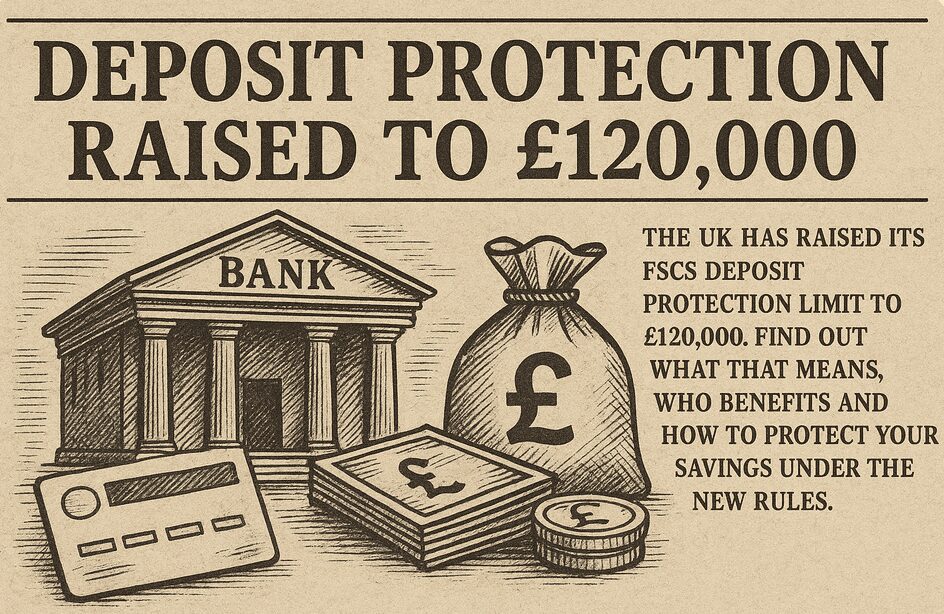

UK Deposit Protection Limit Rises to £120,000
From 1 December 2025 the Financial Services Compensation Scheme (FSCS) will increase the deposit protection limit from £85,000 to £120,000 per person, per authorised institution.
What the New Limit Covers
The FSCS protects cash held with UK‑authorised banks, building societies and credit unions if the firm fails. Under the new rules each individual will be covered for up to £120,000 of savings with a single authorised firm. Joint account holders each receive the same amount, giving a combined £240,000 protection.
Temporary High Balance Protection
Certain life‑event balances enjoy a higher, short‑term limit. For proceeds from a house sale, divorce settlement, redundancy payment, compensation payout or inheritance the protection rises from £1 million to £1.4 million. This higher ceiling applies for up to six months after the funds are received.
Why the Increase Is Happening
The previous £85,000 cap was set in 2017. Since then inflation has reduced the real value of savings, average deposit balances have grown and house prices have risen. Regulators say the uplift keeps consumer protection in line with living costs and brings the UK closer to international standards, reinforcing confidence in the financial system.
What Savers Should Check Now
The increase is automatic – no action is required to receive the higher limit. However, savers should verify that their money is spread across separate authorised institutions, because brands that share a banking licence (for example NatWest and RBS, Halifax, Lloyds and Bank of Scotland, or HSBC and First Direct) count as a single institution for FSCS purposes. If you hold more than £120,000 with one licence, any excess could be at risk if that firm fails.
Digital banks and fintech apps often hold customer funds behind a licensed partner; check the “Who holds my money?” section to confirm the underlying authorised firm.
If you expect a large lump sum from a property sale, inheritance or similar event, remember that the temporary £1.4 million shield lasts only six months, so plan to move or invest the funds within that window.
Does a Higher Limit Mean Banks Are Riskier?
No. Raising the FSCS ceiling is a preventative confidence measure, not a reaction to failing banks. It strengthens protection without signalling increased risk of provider failure.
Practical Tips for Making the Most of the Change
Consider spreading savings across different licences to maximise coverage, especially if you hold substantial cash balances. Use the opportunity to review emergency funds – the new limit gives extra security for buffers larger than the typical £5,000–£20,000 range. For temporary high balances, aim to place the money in an interest‑bearing account or short‑term investment while still within the six‑month window.




