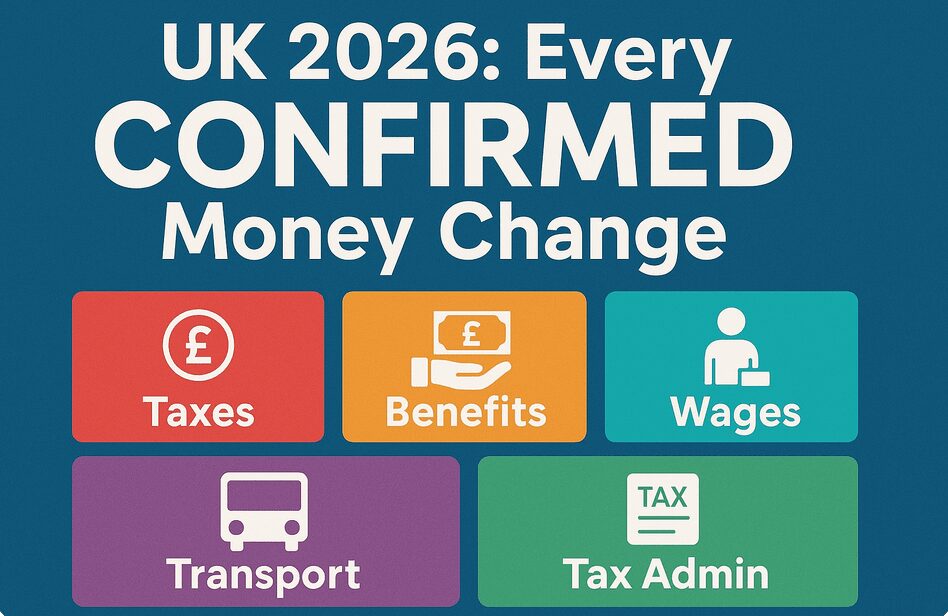

Confirmed financial changes for 2026
The UK government has set out a handful of definite policy shifts that will take effect in 2026. Unlike years with frequent tweaks, most of these changes arrive together, mainly from April 2026, and affect wages, benefits, taxes, digital reporting and the state pension age.
National Living Wage and Minimum Wage rise
From April 2026 the statutory minimum wage rates increase across the UK. The National Living Wage goes up, as do the youth and apprentice rates. If you are salaried, it is worth checking that your annual pay still meets the minimum when your hours are factored in, because underpayment can happen more often than expected.
Benefits and State Pension rates change
New benefit and pension rates apply for the 2026‑27 tax year. This includes adjustments to the State Pension, Universal Credit, Child Benefit and disability benefits such as PIP and DLA. Your first full payment after April is the one to verify, as notification letters sometimes arrive late or show transitional amounts.
Dividend tax rates increase
Starting on 6 April 2026, higher dividend tax rates come into force. The change impacts share investors, company directors who pay themselves via dividends and anyone holding investments outside an ISA. Because ISAs remain tax‑free, reviewing your allowance before the end of the 2025‑26 tax year can help reduce the extra tax you might owe.
Making Tax Digital becomes mandatory for more people
From April 2026, Making Tax Digital for Income Tax is compulsory for self‑employed individuals, landlords and anyone with qualifying income over £50,000. You will need to keep digital records, send quarterly updates to HMRC and use HMRC‑approved software. Free or low‑cost options are available, so hiring an accountant is not required.
State Pension age changes begin
The long‑planned rise in the State Pension age to 67 starts its phased rollout from April 2026. It affects people born after April 1961. Because the timetable is already set in law, you should use the official State Pension age checker to confirm your exact retirement date rather than assuming it based on age alone.
Transport costs in 2026
Bus fares (England)
The £3 national bus fare cap is confirmed to end in 2025. As a result, no nationwide bus fare cap is legislated for 2026. Local authorities may still run discount schemes, so if you rely on buses it is worth checking what travel offers are available in your area early in the year.
Rail fares
Rail fare adjustments usually happen each year, but as of now there is no confirmed nationwide rail fare policy for 2026 written into law. Headlines sometimes suggest changes that are still proposals, so it is safest to treat any reported rail fare updates as unconfirmed until they appear in official legislation.
What is not confirmed for 2026
Despite regular media speculation, the following measures have not yet been confirmed as policy for 2026:
Income tax threshold changes, National Insurance reform, council tax caps, energy price guarantees and ISA allowance increases. If you see these topics in the news, they remain political proposals rather than settled law.
How to prepare for 2026 now
Check that your April 2026 pay rise reflects the new minimum wage rates and that your salary remains compliant when hours are considered.
Review your dividend and investment holdings to see whether the higher dividend tax will affect you, and consider using your ISA allowance before the end of the 2025‑26 tax year.
Determine whether Making Tax Digital for Income Tax applies to you based on your employment status and income level, then start using compatible software to keep digital records.
Use the State Pension age calculator to verify your exact retirement date, especially if you were born after April 1961.
If you use buses, look into local travel discounts early in 2026, as the national cap will no longer be in place.
Keep an eye on official announcements for any future rail fare decisions, but treat current headlines as speculation until they become law.
Final word
2026 brings a handful of clear, legally‑backed shifts that will directly influence how much money stays in your pocket. By focusing on what is confirmed and ignoring the noise, you can take practical steps now to protect your finances and avoid surprises when the changes arrive.